5 Furrow Reversible Plough: Premium Tillage Equipment for Efficient Field Preparation

+86-13615166566
All Categories

5 furrow reversible plough

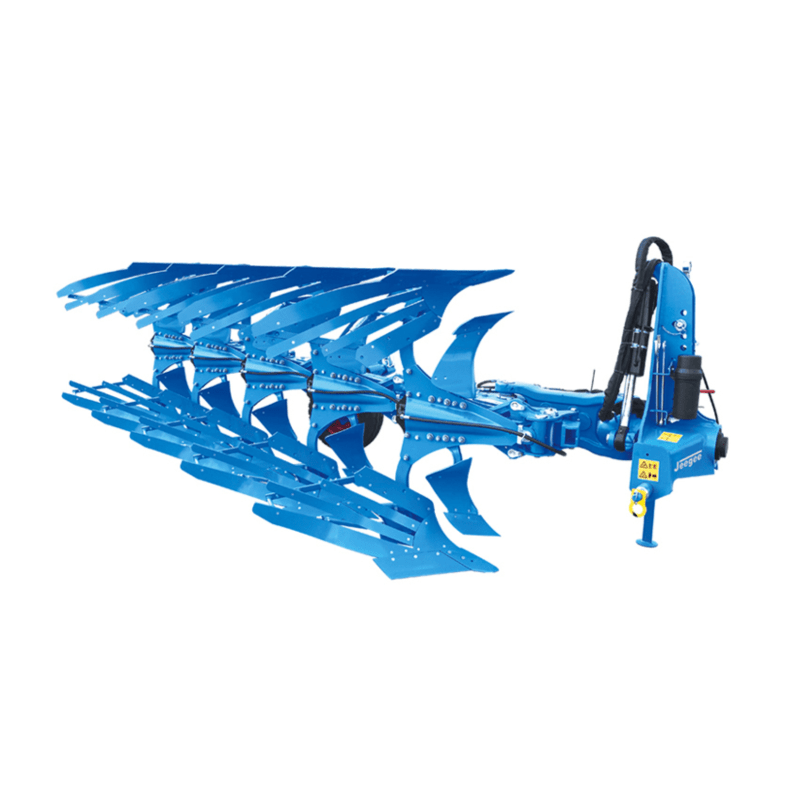
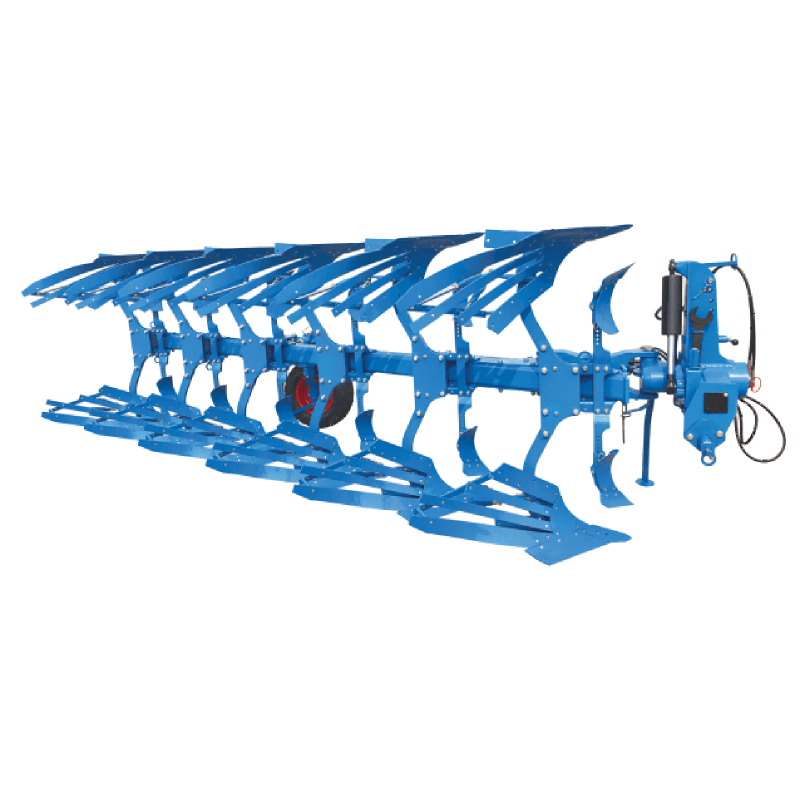
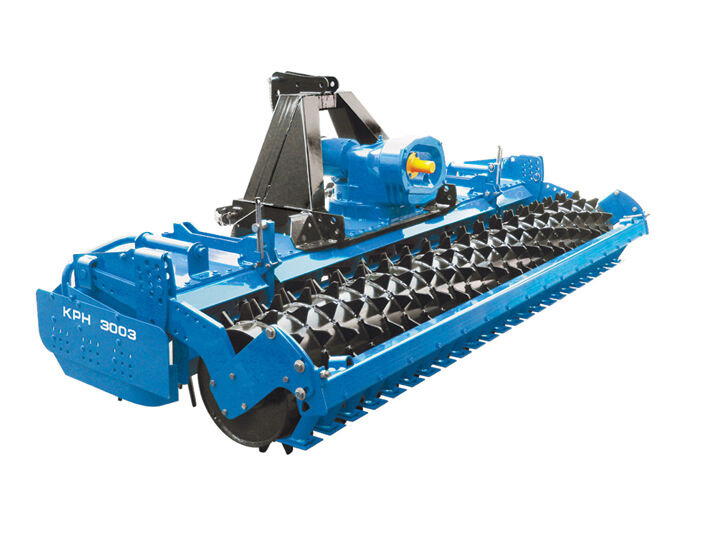
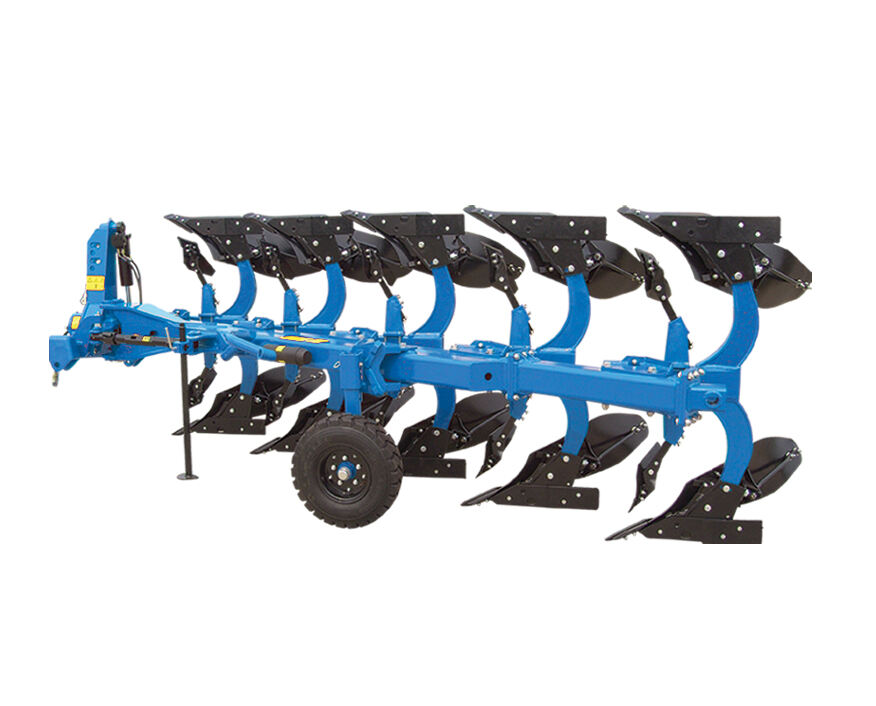
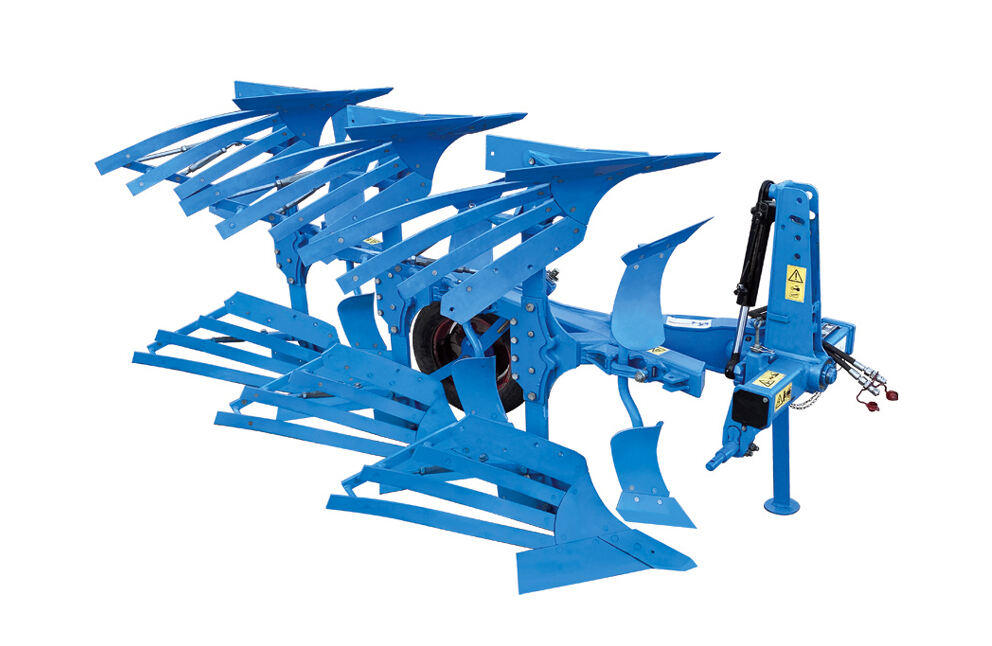
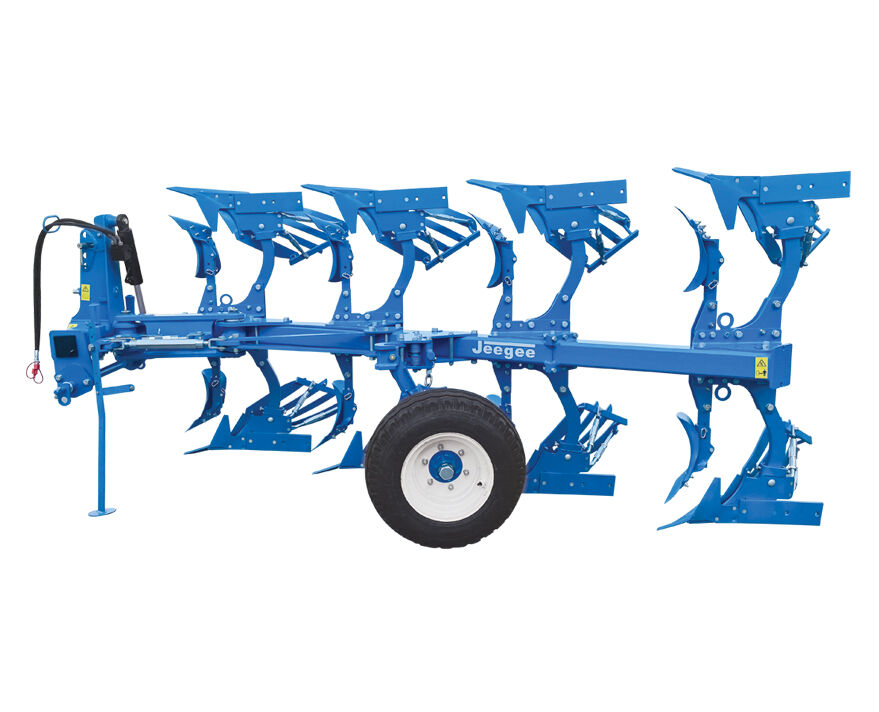
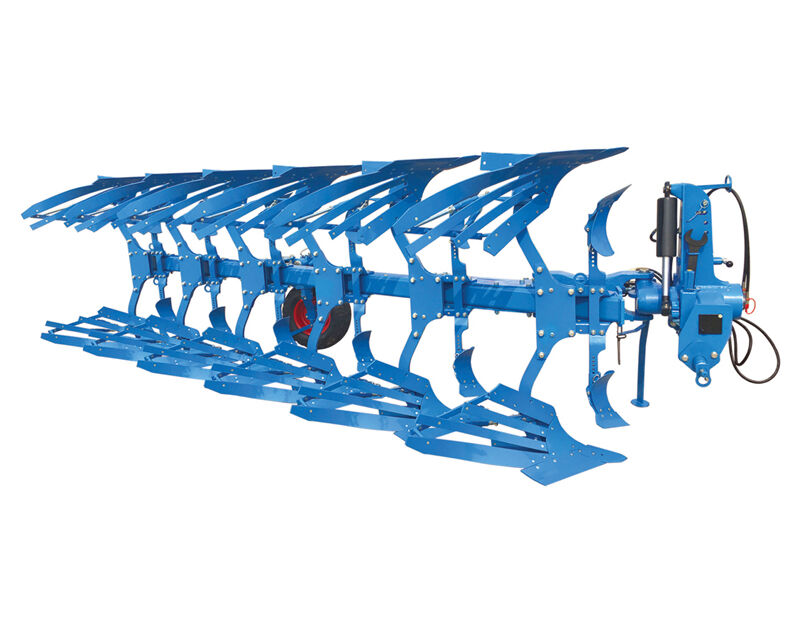
The 5 furrow reversible plough represents a sophisticated agricultural implement designed to optimize soil preparation across medium to large-scale farming operations. This advanced ploughing equipment integrates five independent furrow bodies mounted on a robust frame, enabling simultaneous turning of five furrows in a single pass. The reversible mechanism constitutes the defining technological feature, allowing the plough to work bidirectionally by flipping the entire furrow assembly through hydraulic actuation. This capability ensures continuous operation without requiring headland turns, thereby maximizing efficiency during field operations. The implement connects to tractors within the 100-180 horsepower range, utilizing a three-point linkage system that provides stable attachment and efficient power transfer. Each furrow body incorporates hardened steel mouldboards with specialized profiles engineered to achieve complete soil inversion while minimizing draft resistance. The working width typically spans 175-200 centimeters, making it suitable for extensive acreage where productivity demands are substantial. Primary functions include deep tillage for primary cultivation, weed burial to reduce chemical dependency, crop residue incorporation to enhance organic matter content, and seedbed preparation that creates optimal germination conditions. The technological architecture encompasses automatic hydraulic reset systems protecting against subsurface obstacles, adjustable furrow widths accommodating varying soil conditions, and replaceable wear parts extending operational lifespan. Applications extend across diverse agricultural contexts including cereal production, root crop cultivation, pasture renovation, and conservation tillage systems. The 5 furrow reversible plough particularly excels in mixed farming operations where versatility across different soil types becomes essential. Its design accommodates varying moisture conditions, from moderately dry soils requiring aggressive penetration to heavier clay compositions demanding precise mouldboard geometry. Modern iterations incorporate laser-cut components ensuring dimensional accuracy, reinforced frames withstanding operational stresses, and compatibility with precision agriculture technologies including GPS-guided steering systems that enhance operational precision across expansive fields.

New Products

Investing in a 5 furrow reversible plough delivers substantial operational benefits that directly impact your farming productivity and profitability. The most immediate advantage appears in time savings, as this equipment covers significantly more ground per hour compared to smaller implements. Where a three-furrow model might require eight hours to complete a field, the 5 furrow reversible plough accomplishes the same task in approximately five hours, translating to 35-40 percent time reduction. This efficiency gain allows you to complete seasonal ploughing within optimal weather windows, preventing delays that compromise planting schedules. Fuel economy presents another compelling benefit, since you make fewer passes across your fields. Consolidating work into broader swaths reduces total distance traveled, cutting diesel consumption by roughly 25 percent compared to using narrower equipment with multiple passes. The reversible functionality eliminates dead furrows and standing ridges that plague conventional ploughs, creating uniformly prepared seedbeds without high centers or deep valleys. This consistency improves seed placement accuracy, promotes even emergence, and ultimately enhances crop stands that yield better harvests. Your machinery investment also sees better returns through extended operational windows. The reversible design works effectively on sloping terrain where traditional ploughs struggle, since you can always throw soil uphill regardless of travel direction. This versatility opens previously challenging fields to cultivation, expanding your productive acreage without additional land acquisition. Soil health improvements emerge from the thorough inversion and mixing action. Crop residues incorporate completely rather than bunching on the surface, accelerating decomposition and nutrient cycling. Weed seeds and pest larvae get buried beyond emergence depth, reducing subsequent management costs. The deep penetration breaks compacted layers that restrict root development, improving water infiltration and reducing runoff erosion. Maintenance requirements remain manageable despite the equipment's size and complexity. Manufacturers design these implements with replaceable points, shares, and mouldboards as consumable components. When wear occurs, you replace individual elements rather than entire assemblies, controlling long-term operating costs. The robust construction withstands demanding conditions season after season, with many units delivering 15-20 years of productive service under proper care. Operator comfort improves since modern tractors paired with these ploughs feature suspended cabs and automated depth control. You spend less time manually adjusting equipment and more time monitoring overall field conditions. The psychological advantage of completing large areas quickly should not be underestimated, as it reduces the stress associated with racing against weather patterns and seasonal deadlines that govern agricultural operations.

Tips And Tricks

How Does a Tiller Cultivator Help in Weed Control and Soil Aeration?

07

Jul

How Does a Tiller Cultivator Help in Weed Control and Soil Aeration?

What is a Tiller Cultivator? Tiller cultivators are those machines farmers use to break up and turn over soil before planting crops. The spinning metal teeth on these machines work their way through the ground, creating loose soil beds that make ae...
View More
How Does a Reversible Plough Help in Reducing Soil Compaction During Tillage?

07

Jul

How Does a Reversible Plough Help in Reducing Soil Compaction During Tillage?

Understanding Soil Compaction Challenges in Modern Agriculture The Science Behind Soil Compaction Formation When soil gets compacted, it becomes a real problem for farming operations. Basically, what happens is the soil particles get pushed too clo...
View More
What are the best practices for using a disc harrow in varying soil conditions?

26

Sep

What are the best practices for using a disc harrow in varying soil conditions?

Mastering Disc Harrow Operations for Optimal Soil Management The effective use of a disc harrow stands as a cornerstone of successful soil preparation and management in modern agriculture. Agricultural professionals worldwide rely on disc harrows to ...
View More
How to Choose a Reversible Plough for Modern Farming

13

Mar

How to Choose a Reversible Plough for Modern Farming

Revolutionary Advancements in Modern Agricultural Machinery The agricultural landscape has witnessed remarkable transformations over the decades, with the reversible plough standing as a testament to engineering excellence in farming technology. Thes...
View More

Get a Free Quote

Our representative will contact you soon.
Email
Name
Company Name
Message
0/1000

5 furrow reversible plough

Superior Field Efficiency Through Advanced Reversible Technology

Superior Field Efficiency Through Advanced Reversible Technology

The reversible mechanism integrated into the 5 furrow reversible plough fundamentally transforms field operations by eliminating the inefficiencies inherent in conventional ploughing systems. Traditional ploughs work in a single direction, forcing operators to complete fields using a lands-and-rounds pattern that creates dead furrows where adjacent sections meet and standing ridges along boundaries. These irregularities require subsequent leveling operations, adding time and fuel costs to seedbed preparation. The reversible system solves this problem through hydraulic cylinders that rotate the entire furrow assembly 180 degrees at headlands. As you reach the field edge, hydraulic actuation flips the mouldboards to the opposite orientation, allowing immediate work in the return direction. This back-and-forth pattern produces completely level fields without ridges or furrows, creating uniform planting surfaces that optimize seed placement and emergence. The time savings extend beyond eliminating leveling passes. Conventional systems require wide headland turns to reposition equipment, consuming valuable field time and compacting unworked soil. Reversible technology minimizes turn time to mere seconds while reducing the headland area needed for maneuvering. On a 40-hectare field, this efficiency translates to completing work one to two hours faster than comparable non-reversible equipment. The hydraulic systems controlling the reversal process have evolved substantially, incorporating position sensors that ensure precise alignment before engaging the plough. Safety interlocks prevent accidental actuation during operation, while pressure-relief valves protect components from damage if the reversal encounters resistance. Operators control the entire sequence from the tractor cab using simple lever or button interfaces that require minimal training. Modern iterations integrate electronic controls communicating with tractor management systems, enabling automated reversal sequencing that responds to implement position without manual intervention. The mechanical robustness of reversible frames deserves particular attention, as these structures endure substantial stresses during rotation while supporting the entire implement weight plus operational loads. Manufacturers employ high-tensile steel in critical load paths, with welded box-section construction providing exceptional rigidity. Pivot points utilize oversized bearings operating in sealed housings that exclude contaminants while retaining lubricants, ensuring smooth operation across thousands of reversal cycles. The practical impact on your operation becomes evident during long ploughing days. Reduced physical and mental fatigue results from simplified field patterns and fewer complex maneuvers. You maintain consistent working depth and quality throughout the field rather than struggling with the varying conditions that affect conventional approaches. These advantages combine to make the 5 furrow reversible plough an investment that pays dividends through every acre prepared.
Precision Engineering for Optimal Soil Management and Crop Performance

Precision Engineering for Optimal Soil Management and Crop Performance

The engineering precision embodied in each component of the 5 furrow reversible plough directly influences soil structure, organic matter distribution, and ultimately crop performance across your entire rotation. Each furrow body represents a carefully calculated combination of angles, curves, and materials designed to achieve complete soil inversion while minimizing power requirements. The mouldboard curvature follows mathematically derived profiles that lift soil from the furrow bottom, rotate it through a controlled arc, and deposit it in an inverted position that buries surface residues while exposing fresh soil to atmospheric weathering. This geometric precision ensures consistent performance across varying soil textures, from light sandy loams to heavy clay compositions. Manufacturers offer multiple mouldboard styles tailored to specific conditions: general-purpose profiles for mixed soils, deep-digging designs for hard or compacted ground, and high-speed configurations for lighter soils where faster travel speeds boost productivity. The share and point assembly constitutes the initial soil engagement interface, with hardened cutting edges slicing through roots, residues, and compacted layers. Replaceable points use through-hardened steel or tungsten-carbide inserts that maintain sharp edges across extended use, reducing draft force and fuel consumption. The share width and pitch angle determine penetration characteristics, with adjustable options allowing you to modify aggressiveness based on prevailing conditions. Depth control systems integrate mechanical and hydraulic elements ensuring uniform furrow depth across the entire implement width. Gauge wheels running on unploughed ground provide reference surfaces, while hydraulic cylinders respond to depth variations by adjusting the three-point hitch position. This active control prevents the implement from diving in soft areas or riding up over harder sections, maintaining the target depth that achieves your agronomic objectives. The frame structure supporting these components utilizes high-strength steel sections engineered through finite-element analysis to optimize strength-to-weight ratios. Reduced weight decreases power requirements while robust construction withstands the shock loads encountered when striking buried obstacles. Automatic reset systems protect individual furrow bodies by allowing them to swing backward when encountering immovable objects, then automatically returning to working position once the obstruction passes. This protection prevents catastrophic damage that could sideline equipment during critical planting windows. Adjustable furrow spacing accommodates different crop requirements and soil conditions, with most implements offering width settings from 30 to 45 centimeters per furrow. Narrower spacing suits heavier soils requiring more aggressive working, while wider settings increase productivity in lighter conditions. The ability to customize this parameter ensures the 5 furrow reversible plough adapts to your specific operation rather than forcing compromise. These precision-engineered features combine to create seedbeds with ideal tilth characteristics: adequate fine particles for seed contact, sufficient large aggregates for air and water movement, and complete residue incorporation that accelerates decomposition without creating mat layers that impede emergence.

Exceptional Durability and Long-Term Value in Demanding Agricultural Environments

Exceptional Durability and Long-Term Value in Demanding Agricultural Environments

The construction quality and material selection defining the 5 furrow reversible plough directly determine its operational lifespan and long-term economic value within your farming enterprise. Agricultural equipment faces uniquely harsh operating environments including abrasive soil particles, impact loads from subsurface obstacles, corrosive exposure to moisture and chemicals, and cyclical stresses from repeated loading and unloading. Manufacturers address these challenges through comprehensive engineering approaches that begin with premium materials and extend through every fabrication detail. Frame members utilize high-yield-strength steel alloys providing superior resistance to permanent deformation under load. These materials maintain structural integrity even when encountering unexpected obstacles that generate shock forces many times normal operating loads. Critical stress points incorporate reinforcement gussets and doubled sections that distribute forces across larger areas, preventing crack initiation that leads to progressive failure. Welding procedures follow certified processes ensuring full-penetration joints with mechanical properties matching or exceeding base materials. Many manufacturers employ robotic welding systems that deliver consistent bead profiles and heat input, minimizing distortion while maximizing joint strength. The mouldboard surfaces endure continuous abrasive wear from soil particles passing across their faces at high velocity. Premium implements use through-hardened steel or apply surface treatments that dramatically extend wear life. Some manufacturers offer chilled-cast mouldboards with extremely hard working surfaces backed by tough cores that resist cracking, delivering service lives two to three times longer than standard materials. When wear eventually occurs, the replaceable design allows economical renewal without replacing entire assemblies. Fastener systems securing components employ grade-eight bolts with prevailing-torque lock nuts that resist vibration loosening. Critical pivot points use greaseable bushings or sealed bearings that exclude contaminants while maintaining lubrication films, preventing the wear that creates excessive clearances and sloppy operation. Hydraulic components including cylinders, hoses, and fittings meet industrial standards for pressure ratings and cycle life, with protective routing that prevents damage from crop residues or accidental contact during transport. Paint systems begin with thorough surface preparation including abrasive blasting that removes mill scale and creates anchor profiles for coating adhesion. Multi-layer systems apply corrosion-inhibiting primers followed by durable topcoats formulated to withstand ultraviolet exposure, chemical contact, and mechanical abrasion. Quality finishing substantially extends the interval before corrosion compromises structural integrity or creates maintenance headaches. The financial implications of this durability become apparent when calculating whole-life costs rather than focusing solely on initial purchase price. A well-constructed 5 furrow reversible plough operating 200 hours annually will deliver 3,000-4,000 hours of productive service before requiring major component replacement. This longevity spreads the acquisition cost across many seasons, reducing the per-hectare expense to levels that compare favorably with smaller, less durable alternatives. Resale values remain strong for quality implements maintained according to manufacturer recommendations, providing recovery of investment when you eventually upgrade to newer technology. Parts availability through established dealer networks ensures you can obtain replacement components quickly when wear items require renewal, minimizing downtime during critical operational periods when delays directly impact crop establishment and ultimately harvest outcomes.

Get a Free Quote

Our representative will contact you soon.
Email
Name
Company Name
Message
0/1000