 EN
EN

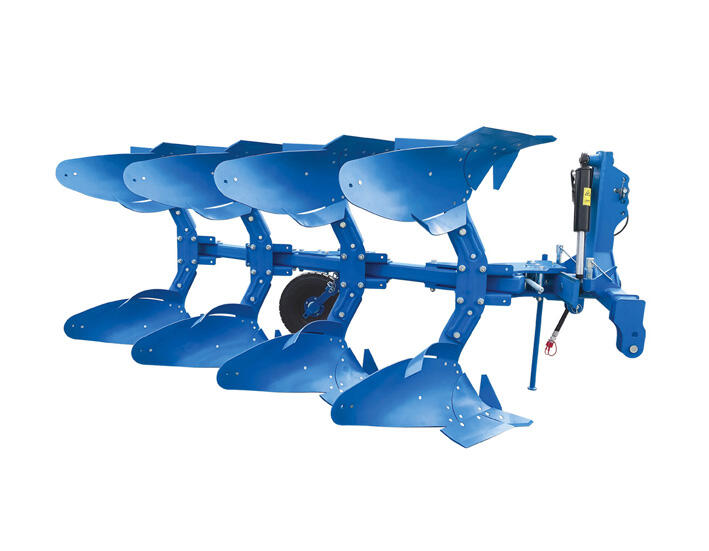
Modern large-scale agriculture demands equipment that can maximize efficiency, reduce operational downtime, and deliver consistent soil preparation results across vast tracts of land. Among the many tillage tools available today, the reversible plough has emerged as a dominant choice for farmers and agribusinesses operating large tractor farming systems. Its design philosophy addresses some of the most persistent challenges in high-capacity field operations — from time management and fuel costs to soil health and crop yield optimization. Understanding why this implement has become a preferred standard requires a closer look at its core engineering advantages and how they translate into measurable field performance.
In large tractor farming systems, every minute spent turning, repositioning, or making unproductive passes represents a direct cost. The reversible plough is specifically engineered to eliminate these inefficiencies by allowing the operator to plow in both directions across a field. Rather than returning to the same starting edge after each pass, the tractor and implement can work continuously across the field, cutting total field time dramatically. This capability alone makes the reversible plough an irreplaceable asset for large-scale operators who need to complete soil preparation within tight weather windows and strict planting schedules.
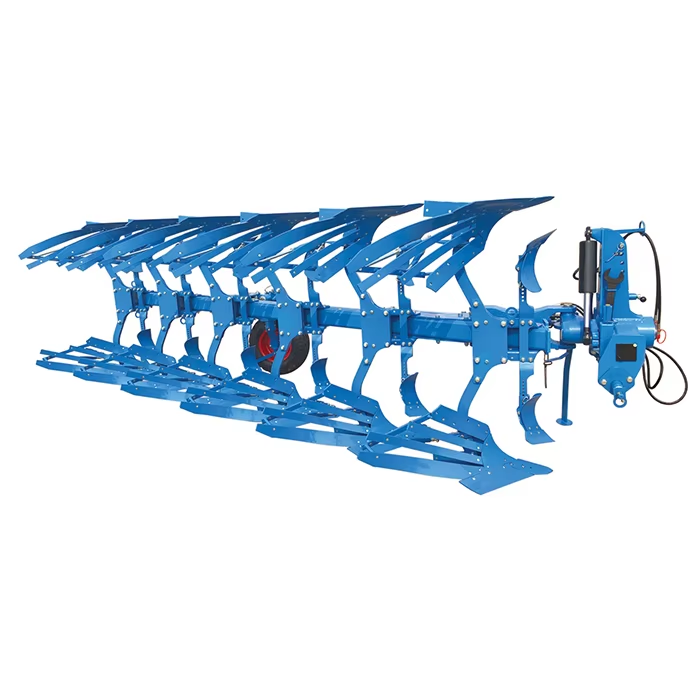
The Core Operational Advantage of a Reversible Plough in Large-Scale Systems
Bidirectional Plowing Eliminates Dead-End Passes
Traditional fixed mouldboard ploughs force the operator to work in one direction, requiring a headland turn at the end of each furrow and a return pass along the same edge. On smaller fields, this inefficiency is tolerable, but on large parcels, it results in massive cumulative time loss. The reversible plough solves this by carrying two sets of plough bodies — one set oriented for left-hand work, the other for right-hand work — allowing a 180-degree hydraulic rotation at the headland so the next furrow begins immediately in the opposite direction.
This bidirectional capability means that large tractor farming systems can execute straight, consistent furrows from one side of the field to the other without any wasted passes. The tractor always moves forward productively, reducing headland time to a minimum. For farms operating hundreds of hectares, this operational gain translates directly into lower fuel consumption, reduced tractor engine hours, and faster field turnaround.
The hydraulic reversal mechanism found on modern reversible plough designs is typically fully controlled from the tractor cabin, requiring no manual adjustment by the operator. This keeps the workflow fluid and reduces operator fatigue across long working days, which is a critical factor in sustainable large-farm operations.
Uniform Soil Inversion Across Wide Working Widths
Large tractor farming systems typically pair implements with high-horsepower tractors capable of pulling multiple plough bodies simultaneously. The reversible plough is available in configurations ranging from two to seven or more bodies, each designed to turn a precise width and depth of soil with consistent results. This scalability makes the reversible plough an ideal match for powerful modern tractors in the 150 to 400-plus horsepower range.
Because both plough body sets perform identically when alternated, the entire field receives uniform soil inversion depth and quality regardless of which direction the tractor travels. This consistency is critical for large-scale crop production, where uneven tillage depth can create variable seedbed conditions and ultimately reduce yield uniformity. The reversible plough delivers the kind of precision that supports precision agriculture principles even at high operating speeds.
Why Soil Health and Field Quality Benefit from Reversible Plough Use
Ridge-Free Field Surface After Plowing
One of the most recognized agronomic benefits of the reversible plough is the elimination of open furrows and ridges that conventional ploughs leave in the center and margins of fields. Traditional ploughing systems create a central furrow or ridge depending on the pattern used, which complicates subsequent field operations such as cultivating, drilling, and harvesting. The reversible plough, by turning all soil in the same direction on each pass, leaves a flat, uniform field surface.
A ridge-free field surface is not merely an aesthetic advantage. It directly supports the performance of subsequent tillage and seeding equipment, allowing them to operate at optimal depth and speed without navigating surface irregularities. For large-scale farming where combine harvesters and precision drills operate over the same ground, this surface consistency has a meaningful impact on machine efficiency and crop establishment quality.
The reversible plough also minimizes soil compaction patterns that can develop along headlands and turning zones. Because the tractor follows a disciplined path with fewer turns and repositioning movements, the compacted wheel traffic zones are reduced, protecting soil structure across the entire working area.
Effective Burial of Crop Residue and Weed Seed
Ploughing with a reversible plough delivers deep, thorough soil inversion that effectively buries surface crop residue, volunteer plants, and weed seeds. This burial disrupts weed germination cycles and incorporates organic matter into the soil profile where it can decompose and contribute to long-term fertility. In large-scale systems where chemical weed management costs are significant, effective mechanical burial by the reversible plough can reduce herbicide dependency over time.
The complete inversion provided by well-designed mouldboard bodies on a reversible plough also helps break up and aerate compacted subsoil layers when operated at appropriate working depths. This aerating effect improves water infiltration, root development, and overall soil health — outcomes that support consistent crop performance across large land areas.
Hydraulic Full Suspension Design and Its Role in Large Tractor Compatibility
Full Suspension Linkage for Stable High-Speed Operation
Modern large-farm reversible plough designs typically feature a full suspension frame that connects to the tractor's three-point hitch and is supported through the hydraulic system. This full suspension configuration allows the implement to follow ground contours smoothly without transferring excess stress to the tractor's rear linkage. At the working speeds preferred by large-scale operators — often between 6 and 9 kilometers per hour — this suspension design is critical for maintaining uniform working depth and reducing mechanical wear.
Full suspension also makes the reversible plough more stable during transport between fields, as the frame distributes weight evenly and reduces oscillation on road surfaces. Large farming operations frequently move equipment across public roads and farm tracks, so transport stability is a practical operational requirement rather than a secondary consideration.
The hydraulic system governing the reversible plough's body rotation is typically integrated with the tractor's external hydraulic supply, meaning operators benefit from the full flow capacity of modern tractor hydraulic systems. This integration enables faster, more reliable body switching at headlands, further reducing nonproductive time during long operational days.
Adjustability for Variable Soil and Crop Conditions
Large tractor farming systems often operate across diverse soil types within the same farm or region — from light sandy loams to heavy clay soils with high draft resistance. The reversible plough addresses this challenge through adjustable frame geometry, changeable share types, and variable working depth settings. Operators can configure the implement to match the specific soil profile and moisture conditions encountered, ensuring optimal performance without excessive tractor load or fuel consumption.
Skimmer attachments are another feature commonly available on reversible plough systems used in large-scale operations. These small pre-cutting bodies skim the top layer of stubble and surface residue into the furrow bottom before the main mouldboard body completes the inversion. This improves residue burial quality in high-biomass post-harvest conditions, which is increasingly common as high-yielding crop varieties leave substantial straw volumes on the field.
Economic and Logistical Value of the Reversible Plough for Large Farm Operations
Reduced Field Completion Time and Operating Costs
The financial case for choosing a reversible plough in large tractor farming systems is compelling. The elimination of unproductive return passes combined with the ability to plow at higher speeds without surface quality degradation means that significantly more hectares can be completed per operational day. This higher daily output allows farms to meet tight planting windows, which are a critical driver of seasonal yield outcomes.
Fuel represents one of the largest variable costs in large-scale tillage operations. Because the reversible plough minimizes idle travel and keeps the tractor in productive engagement for a higher proportion of operating hours, fuel consumption per hectare is measurably lower compared to conventional ploughing patterns. Over an entire ploughing season, these savings accumulate to a meaningful reduction in input costs that strengthens farm profitability.
Tractor engine hours are also reduced with the reversible plough, extending the service intervals between major maintenance events and delaying the capital expenditure associated with tractor replacement. For large farming enterprises managing fleets of tractors, this operational efficiency benefit applies across multiple units and multiplies the financial return from the initial implement investment.
Compatibility with Modern Tractor Technology and GPS Guidance Systems
The reversible plough integrates naturally with GPS-guided auto-steer systems that are now standard equipment on many large agricultural tractors. Because the implement works in straight, parallel passes in both directions, GPS guidance systems can precisely direct the tractor without requiring operator input throughout the field pass. This reduces operator fatigue, improves furrow straightness, and minimizes overlap or skip areas that waste fuel and time.
Variable rate technology and section control features available on advanced tractor systems can also be leveraged more effectively when using a reversible plough, as the consistent unidirectional soil inversion creates a predictable seedbed for subsequent precision applications. This compatibility with digital agriculture tools positions the reversible plough as a foundational implement in the modern large-farm technology stack.
FAQ
What makes a reversible plough different from a conventional fixed mouldboard plough?
A reversible plough carries two sets of plough bodies that can be hydraulically rotated 180 degrees at the end of each field pass, allowing the implement to work in both directions without leaving open furrows or requiring unproductive return passes. A conventional fixed mouldboard plough can only throw soil in one direction, which creates central ridges or furrows and requires the tractor to make non-working return passes along the field edge. The reversible plough eliminates this limitation, making it significantly more efficient for large-field operations.
How many tractor horsepower is typically needed to operate a reversible plough effectively?
The power requirement depends on the number of bodies and the working conditions, but as a general guideline, each reversible plough body requires approximately 35 to 50 horsepower in normal soil conditions. A four-body reversible plough would therefore need a tractor in the range of 140 to 200 horsepower. In heavy clay soils or deep ploughing applications, the draft requirement increases, and operators should refer to the implement manufacturer's specification charts to match tractor capacity with the chosen implement configuration.
Is the reversible plough suitable for use in stony or rocky soil conditions?
Modern reversible plough designs are typically equipped with mechanical or hydraulic overload protection systems, such as trip-reset or shear bolt mechanisms, that allow individual plough bodies to deflect when they encounter stones or hard obstructions. This protection prevents structural damage to the frame and mouldboard components. However, in extremely stony conditions with frequent large rocks, the working speed and productivity may be reduced compared to clean agricultural soils, and regular inspection of wear parts such as shares and points is recommended.
Can a reversible plough be used for both primary and secondary tillage in a large farming system?
The reversible plough is primarily a primary tillage implement designed for deep soil inversion and seedbed preparation in the initial stages of land preparation. It is not typically used for secondary tillage, which involves lighter cultivations to refine the seedbed texture. However, in minimum tillage systems, the reversible plough may be operated at shallower depths to achieve a combined primary and partial secondary tillage effect in a single pass, reducing overall field traffic and the number of operations required before planting.
Table of Contents
- The Core Operational Advantage of a Reversible Plough in Large-Scale Systems
- Why Soil Health and Field Quality Benefit from Reversible Plough Use
- Hydraulic Full Suspension Design and Its Role in Large Tractor Compatibility
- Economic and Logistical Value of the Reversible Plough for Large Farm Operations
-
FAQ
- What makes a reversible plough different from a conventional fixed mouldboard plough?
- How many tractor horsepower is typically needed to operate a reversible plough effectively?
- Is the reversible plough suitable for use in stony or rocky soil conditions?
- Can a reversible plough be used for both primary and secondary tillage in a large farming system?