 EN
EN

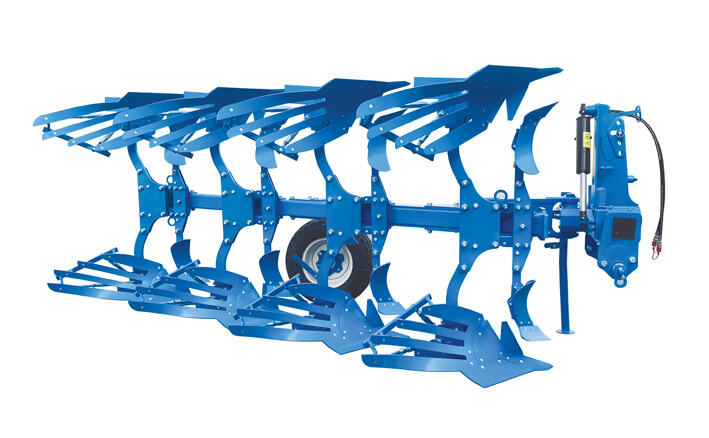
Modern agriculture demands more than just turning soil — it requires precision, efficiency, and a deep understanding of how tillage practices affect long-term land productivity. The reversible plough has emerged as one of the most effective tillage implements for farmers who want to improve soil quality while maintaining operational efficiency across diverse field conditions. Unlike conventional single-direction ploughs, this implement offers a fundamentally different approach to soil inversion that directly benefits soil structure, fertility, and crop readiness.
Understanding how a reversible plough improves soil quality requires looking at both the mechanical process it performs and the agronomic outcomes it produces. From breaking up compacted subsoil layers to burying surface residues and promoting aeration, the reversible plough addresses multiple soil health challenges in a single pass. This article explores the specific mechanisms, agronomic benefits, and practical considerations that make the reversible plough a preferred choice in professional agricultural operations worldwide.
The Mechanical Principle Behind the Reversible Plough
How the Reversible Plough Works in the Field
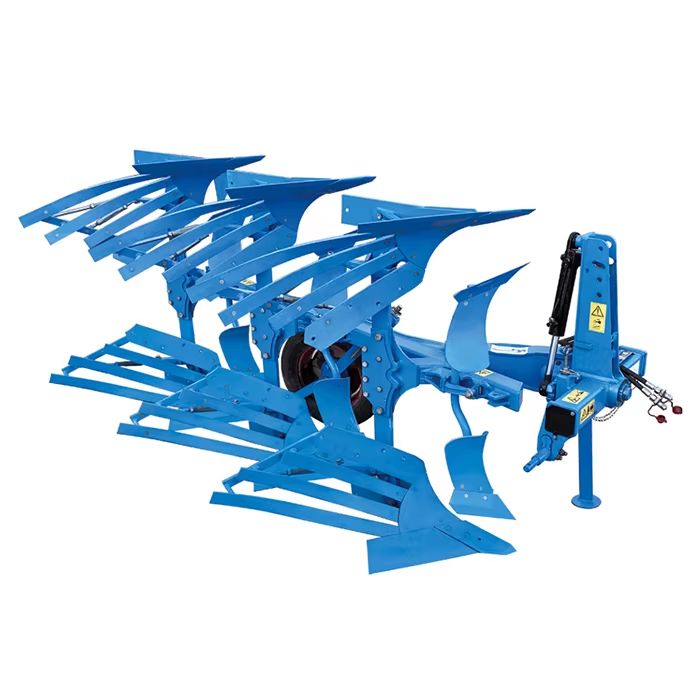
The reversible plough operates by mounting two sets of plough bodies on a central frame — one set configured for left-hand inversion and the other for right-hand inversion. At the end of each furrow, the operator hydraulically rotates the frame 180 degrees, allowing the implement to work back across the field in the opposite direction without leaving an unploughed strip or a central ridge. This bidirectional capability is the defining mechanical feature that sets the reversible plough apart from conventional fixed-body ploughs.
The hydraulic rotation mechanism is typically integrated with the tractor's three-point hitch system, enabling smooth and consistent turning under load. Full suspension hydraulic models, in particular, allow the plough bodies to follow ground contours more accurately, ensuring uniform furrow depth across uneven terrain. This mechanical precision directly translates into more consistent soil inversion depth, which is a critical factor in achieving uniform soil quality improvement across the entire field.
Each plough body consists of a share, mouldboard, and landside working together to cut, lift, and invert a defined slice of soil. The geometry of the mouldboard determines how aggressively the soil is turned and how thoroughly surface material is buried. On a reversible plough, both sets of bodies are engineered to produce mirror-image furrow profiles, ensuring that the soil inversion quality remains consistent regardless of the direction of travel.
Deep Plowing Capability and Its Role in Soil Improvement
One of the most agronomically significant capabilities of the reversible plough is its ability to perform deep plowing — typically reaching depths of 25 to 40 centimeters depending on the model and soil conditions. Deep plowing with a reversible plough breaks through compaction layers, also known as hardpans or plough pans, that form over time due to repeated shallow tillage and heavy machinery traffic. These compaction layers restrict root penetration, impede water drainage, and limit the movement of nutrients through the soil profile.
By penetrating below these compacted zones, the reversible plough physically fractures and loosens the dense soil matrix. This mechanical disruption creates macropores — large channels through which water, air, and plant roots can move freely. The immediate result is improved soil porosity and drainage capacity, both of which are foundational to healthy crop development. Over successive seasons, deep plowing with a reversible plough contributes to a progressively deeper and more biologically active root zone.
Deep plowing also brings subsoil minerals closer to the surface, where they become accessible to crops. In fields where topsoil has been depleted through years of intensive cropping, this subsoil exposure can meaningfully supplement the nutrient supply available to plants. The reversible plough thus serves not only as a tillage tool but as a mechanism for redistributing soil resources across the profile.
Soil Inversion and Its Direct Impact on Soil Quality
Burying Crop Residues and Weed Seeds
One of the most visible and immediately beneficial effects of using a reversible plough is the thorough burial of crop residues and surface organic matter. After harvest, fields are often covered with stubble, straw, and plant debris that, if left on the surface, can harbor disease pathogens, pest populations, and weed seeds. The reversible plough inverts the soil slice completely, placing this surface material at the bottom of the furrow where it is covered by a layer of fresh soil.
Buried crop residues decompose more rapidly under anaerobic conditions at depth, releasing nutrients back into the soil in forms that are accessible to subsequent crops. This decomposition process also stimulates microbial activity in the lower soil layers, gradually improving the biological diversity and fertility of the deeper soil profile. Over time, consistent use of a reversible plough to bury residues contributes to a measurable increase in soil organic matter content.
Weed seed burial is equally important from a crop management perspective. Seeds buried at depths greater than 10 centimeters rarely germinate successfully, as most weed species lack the energy reserves to push through that much soil. By inverting the topsoil layer, the reversible plough effectively removes a significant portion of the weed seed bank from the germination zone, reducing weed pressure in the following crop without relying solely on herbicide applications.
Improving Soil Aeration and Water Infiltration
Soil aeration is a critical but often overlooked component of soil quality. Plant roots require oxygen for respiration, and beneficial soil microorganisms depend on aerobic conditions to function effectively. Compacted or waterlogged soils restrict gas exchange between the soil and the atmosphere, creating anaerobic zones that are hostile to root growth and microbial life. The reversible plough addresses this by physically opening up the soil structure through inversion and fracturing.
When the reversible plough turns a furrow slice, it creates a rough, cloddy surface that allows air to penetrate deeply into the soil profile. This increased surface area and structural openness dramatically improves gas exchange, allowing oxygen to reach deeper layers and carbon dioxide produced by root and microbial respiration to escape. The result is a more biologically active soil environment that supports faster nutrient cycling and stronger root development.
Water infiltration rates also improve significantly after plowing with a reversible plough. The loosened soil structure allows rainfall and irrigation water to percolate downward rather than running off the surface. This reduces erosion risk, improves water use efficiency, and ensures that moisture is stored at root depth where crops can access it during dry periods. In regions with variable rainfall, this improved water-holding capacity can be the difference between a successful harvest and a stressed crop.
Agronomic Benefits Across Different Soil Types and Crops
Performance on Heavy Clay and Compacted Soils
Heavy clay soils present some of the most challenging conditions for tillage equipment. Their high cohesion and tendency to compact under wet conditions make them difficult to work and prone to forming surface crusts that impede seedling emergence. The reversible plough is particularly well-suited to these conditions because its mouldboard geometry is designed to slice cleanly through dense material and invert it completely, breaking up clods and exposing fresh soil to weathering.
In clay-dominant fields, the reversible plough's ability to work at consistent depth without leaving ridges or unploughed strips is especially valuable. The uniform furrow profile it creates allows subsequent tillage operations — such as discing or power harrowing — to work more efficiently, reducing the total number of passes needed to prepare a seedbed. This operational efficiency translates directly into lower fuel costs and reduced soil compaction from repeated machinery traffic.
Frost action on plowed clay soils further enhances the soil quality improvement initiated by the reversible plough. When clay clods are exposed to freeze-thaw cycles over winter, the expansion and contraction of water within the soil matrix breaks them down into finer aggregates. This natural weathering process, enabled by the inversion performed by the reversible plough, produces a finer, more workable soil structure by spring without additional mechanical intervention.
Suitability for Cereal, Root Crop, and Vegetable Production
The reversible plough delivers agronomic benefits across a wide range of crop types, but its impact is particularly pronounced in crops that demand deep, well-structured seedbeds. Cereal crops such as wheat and barley benefit from the clean, weed-suppressed seedbed that the reversible plough creates, as reduced weed competition in the early growth stages has a disproportionately large effect on final yield. The uniform furrow depth also ensures consistent seed placement depth when drilling, which improves germination uniformity.
Root crops such as sugar beet, carrots, and potatoes require deep, stone-free, well-aerated soil for optimal development. Forked or stunted roots caused by compaction or stones are a major quality issue in these crops. The reversible plough's deep inversion capability loosens the soil to the depth required for unobstructed root development, while also burying stones and debris that could cause physical damage to harvested roots. This directly improves both yield and marketable quality.
Vegetable producers working on intensive rotations also benefit from the reversible plough's ability to reset soil structure between crops. Intensive vegetable production often involves heavy irrigation, frequent harvesting traffic, and rapid crop succession — all of which degrade soil structure quickly. Regular use of a reversible plough between rotations restores porosity, buries disease inoculum from previous crops, and creates the clean, friable seedbed that high-value vegetable crops require.
Operational Efficiency and Long-Term Soil Health Management
Eliminating Ridges and Improving Field Uniformity
One of the practical advantages of the reversible plough over conventional fixed-body ploughs is the elimination of the central ridge and open furrow that conventional ploughing leaves at the field boundaries. These ridges and furrows create uneven terrain that complicates subsequent tillage, drilling, and harvesting operations. They also create zones of differential soil moisture and compaction that lead to uneven crop establishment and growth.
Because the reversible plough works in both directions, it deposits soil consistently across the entire field width without accumulating material at the center or leaving open furrows at the headlands. The result is a flat, uniform plowed surface that simplifies all subsequent field operations. This uniformity is not merely an aesthetic benefit — it has measurable effects on seedbed quality, drainage patterns, and the efficiency of precision agriculture technologies such as GPS-guided drilling and variable-rate fertilizer application.
Over multiple seasons, the consistent field surface maintained by the reversible plough also reduces the risk of waterlogging in low-lying areas that would otherwise accumulate in the depressions left by conventional ploughing. Better surface drainage reduces the incidence of soil-borne diseases associated with wet conditions and allows earlier field access in spring, extending the effective growing season in regions with wet winters.
Integration with Sustainable Soil Management Practices
The reversible plough is not inherently at odds with sustainable agriculture — when used strategically, it is a powerful tool for soil rehabilitation and long-term fertility management. In fields that have been under no-till or minimum tillage for several years and have developed significant compaction problems, a single deep plowing pass with a reversible plough can restore soil structure more effectively than multiple shallow tillage operations. This targeted use minimizes soil disturbance while addressing specific structural problems.
Integrating the reversible plough into a rotation that also includes cover cropping and organic matter additions produces compounding soil quality benefits. The plough buries cover crop biomass efficiently, accelerating its decomposition and nutrient release. Combined with the improved aeration and drainage that plowing provides, this creates conditions highly favorable to the soil microbial communities that drive nutrient cycling and organic matter formation.
Farmers managing diverse rotations across variable soil types also benefit from the reversible plough's adaptability. Adjustable working depth, interchangeable mouldboard profiles, and compatibility with a range of tractor power outputs make the reversible plough a versatile implement that can be configured to match specific soil conditions and agronomic objectives. This flexibility supports a more responsive and site-specific approach to soil management rather than a one-size-fits-all tillage strategy.
FAQ
How does a reversible plough differ from a conventional plough in terms of soil quality outcomes?
A reversible plough produces a flat, ridge-free field surface by working in both directions, whereas a conventional plough leaves a central ridge and open furrow. This uniformity improves drainage, seedbed consistency, and the effectiveness of subsequent tillage. The reversible plough also typically allows deeper working depths, which more effectively breaks compaction layers and improves soil aeration compared to most conventional plough configurations.
How often should a reversible plough be used to maintain soil quality?
The appropriate frequency depends on soil type, cropping system, and the degree of compaction present. In intensive arable rotations on heavy soils, annual plowing with a reversible plough may be justified. On lighter soils or in systems that include cover crops and organic matter inputs, plowing every two to three years may be sufficient to maintain soil structure. The key is to use the reversible plough when soil conditions indicate a genuine structural problem rather than as a routine default operation.
Can a reversible plough be used on sloped or uneven terrain?
Yes, the reversible plough is well-suited to sloped terrain precisely because it eliminates the directional soil movement associated with conventional ploughing. On slopes, conventional ploughs tend to move soil downhill over time, causing topsoil loss from upper slopes and accumulation at the base. The reversible plough's bidirectional inversion distributes soil movement more evenly, reducing this erosion effect and helping to maintain a more uniform topsoil depth across the slope.
What tractor power is required to operate a reversible plough effectively?
Power requirements vary with the number of furrows, working depth, and soil conditions. As a general guideline, each plough body requires approximately 25 to 35 horsepower under typical conditions, with heavier clay soils and deeper working depths demanding the higher end of that range. Three-point mounted full suspension hydraulic reversible plough models are designed to work with a broad range of tractor sizes, making them accessible to both mid-scale and large commercial farming operations.
Table of Contents
- The Mechanical Principle Behind the Reversible Plough
- Soil Inversion and Its Direct Impact on Soil Quality
- Agronomic Benefits Across Different Soil Types and Crops
- Operational Efficiency and Long-Term Soil Health Management
-
FAQ
- How does a reversible plough differ from a conventional plough in terms of soil quality outcomes?
- How often should a reversible plough be used to maintain soil quality?
- Can a reversible plough be used on sloped or uneven terrain?
- What tractor power is required to operate a reversible plough effectively?