 EN

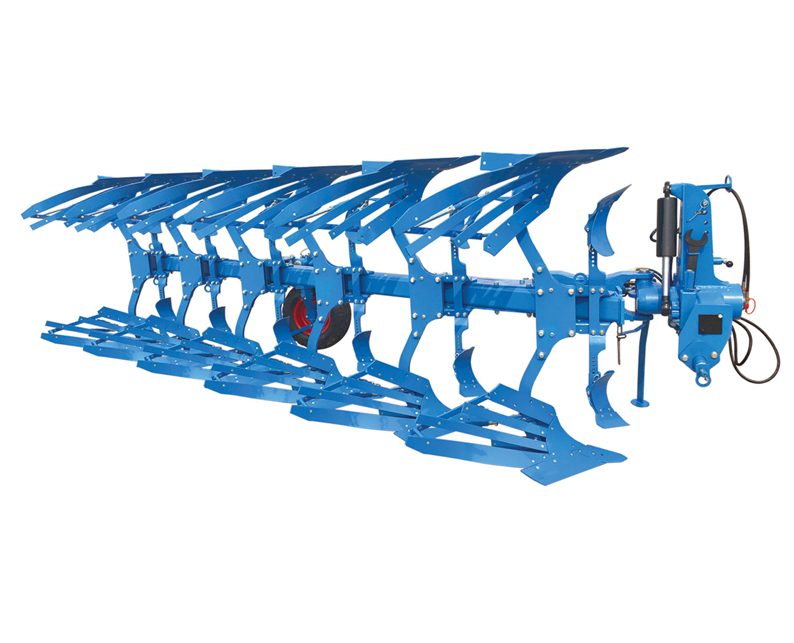
A reversible plough has become an indispensable tool in modern agricultural land preparation, fundamentally changing how farmers approach soil management and field efficiency. This specialized equipment enables operators to turn soil in both directions, eliminating the need for multiple passes or repositioning at field boundaries, which significantly reduces operational time and fuel consumption. Understanding how a reversible plough operates and mastering its application techniques is essential for anyone seeking to optimize land preparation processes and achieve consistent, high-quality soil turning results across diverse farm environments.

The reversible plough represents a significant evolution in ploughing technology, combining mechanical precision with practical efficiency to address the unique demands of modern farming. Whether you operate on small plots or expansive agricultural landscapes, learning the proper techniques for deploying a reversible plough will enhance your soil preparation capabilities, improve field workflow, and extend the productive life of your equipment through correct usage and maintenance practices.
Understanding the Reversible Plough Design and Mechanism
Core Components of a Reversible Plough System
A reversible plough comprises several interconnected components that work together to achieve bidirectional soil turning. The main moldboard, which is the curved surface responsible for cutting and inverting soil, is mirrored on both sides of the plough frame, allowing the reversible plough to operate effectively in either direction. The reversible plough frame is typically mounted on a hydraulic mounting system that enables the operator to lift and rotate the entire ploughing assembly between passes, positioning it to cut soil in the opposite direction during the return pass.
The coulter assembly on a reversible plough includes sharp, replaceable cutting blades that slice through soil and organic matter before the moldboard engages. The reversible plough also features adjustable depth wheels that maintain consistent ploughing depth across the entire field, preventing uneven soil preparation that could lead to drainage issues or crop establishment problems. Hydraulic controls integrated into the reversible plough allow operators to adjust width, depth, and cutting angle from the tractor cab, providing flexibility and precision for varying soil conditions.
How Reversible Plough Directional Switching Works
The reversible plough achieves its signature bidirectional capability through a rotating frame mechanism that pivots on a central axis. When approaching field boundaries or completing a pass, the operator engages the hydraulic system to lift the reversible plough out of the soil and rotate the entire assembly approximately 180 degrees, reversing which moldboard is now positioned to cut and turn soil. This design eliminates the crown formation typical of traditional ploughing systems, where soil is consistently thrown toward the center of the field, creating an uneven surface.
The reversible plough's rotation happens smoothly and predictably, with modern hydraulic systems completing the transition in seconds. This rapid reversibility means a reversible plough can be repositioned at field edges without requiring the tractor to navigate additional preparatory passes or maneuvers, making each circuit through the field productive in both directions. The result is significantly improved operational efficiency compared to conventional fixed-moldboard ploughs.
Techniques for Optimal Soil Turning Performance
Establishing Proper Ploughing Patterns with a Reversible Plough
When beginning work with a reversible plough, operators must establish a consistent ploughing pattern that maximizes field coverage while minimizing overlaps and missed strips. A reversible plough typically operates most efficiently using a 'gathering' pattern, where operators work from the field edges toward the center, allowing the reversible plough to deposit soil toward the center in both directions, creating a relatively level field. This contrasts with traditional ploughing systems and significantly simplifies land preparation by eliminating the need for finishing passes to level field crowns.
The reversible plough should be adjusted to cut at a consistent depth throughout each pass, with depth wheels set to maintain between 20 and 25 centimeters for most soil conditions. Starting with a reversible plough set shallower rather than deeper allows operators to assess soil resistance and make adjustments before committing to deeper passes. A reversible plough operating at excessive depth requires greater tractor power, increases fuel consumption, and may cause equipment strain without providing corresponding yield improvements.
Managing Soil Conditions During Reversible Plough Operations
Soil moisture significantly impacts reversible plough performance and should be carefully monitored before beginning work. Soil that is too wet will clump behind a reversible plough, clogging the moldboard and preventing proper soil inversion, while excessively dry soil may resist cutting and increase fuel requirements. The optimal soil condition for a reversible plough is slightly moist, firm enough to cut cleanly but not so wet that it adheres to equipment surfaces or compacts beneath the tractor wheels.
A reversible plough works most effectively on fields with moderate organic matter content and consistent soil texture. When encountering areas with excessive crop residue, operators should consider removing or shredding stubble before deploying a reversible plough, as tangled residue can wrap around the coulter assembly and reduce cutting efficiency. A reversible plough will still function with higher residue loads but requires more frequent cleaning and power, making preliminary residue management a worthwhile investment for overall operational efficiency.
Advantages and Practical Implementation Considerations
Efficiency Gains and Labor Productivity with a Reversible Plough
Adopting a reversible plough can reduce total ploughing time by up to 30% compared to traditional fixed-moldboard systems, primarily because a reversible plough eliminates non-productive return passes or complex field patterns. With a reversible plough, each pass accomplishes actual soil turning in both directions, meaning less time spent repositioning and more time genuinely preparing soil. For large farming operations processing hundreds of hectares annually, this efficiency gain translates to measurable cost reductions and extended planting windows.
The reversible plough also delivers superior soil levelness after ploughing is complete, reducing the need for additional smoothing passes with other equipment. Many farms report that implementing a reversible plough allows them to eliminate one or more finishing passes, further streamlining their pre-planting routine. The reversible plough therefore becomes a time-and-cost-saving investment that pays dividends across multiple seasons.
Maintenance and Long-Term Performance Optimization
Maintaining a reversible plough extends its operational life and ensures consistent performance throughout its service years. The moldboard surfaces should be inspected regularly for wear and replaced when erosion reduces cutting efficiency; a reversible plough with worn moldboards requires greater tractor power and produces poorer soil inversion. Coulter blades on a reversible plough wear more quickly than moldboards and should be sharpened or replaced annually, depending on field conditions and workload intensity.
Hydraulic systems that enable reversible plough rotation must be checked seasonally for leaks and pressure consistency; a reversible plough with compromised hydraulics becomes a fixed-plough system, losing its primary operational advantage. Regular cleaning after each use, particularly in wet conditions, prevents soil accumulation that can create mechanical stress on frame welds and rotating joints. A reversible plough that receives preventive maintenance throughout the year will deliver reliable performance across multiple ploughing seasons and represent excellent long-term agricultural investment.
FAQ
What makes a reversible plough different from a conventional fixed plough?
A reversible plough can rotate to cut soil in both directions, eliminating field crowns and reducing total ploughing passes required, whereas a fixed plough always turns soil in one direction and creates a center ridge that requires additional finishing work. The reversible plough's bidirectional design means each pass accomplishes productive soil turning, making it substantially more efficient for large-scale land preparation.
What soil conditions are most suitable for reversible plough operation?
A reversible plough performs optimally in soil that is slightly moist, firm, and relatively free of excessive crop residue. Soil that is too wet will clump and clog the reversible plough, while excessively dry soil resists cutting and increases fuel consumption; slightly moist soil allows the reversible plough to cut cleanly and invert soil effectively without additional preparation.
How much maintenance does a reversible plough require annually?
A reversible plough requires seasonal inspection of moldboards and coulter blades, regular hydraulic system checks, and thorough cleaning after each use to prevent soil accumulation and corrosion. Moldboards should be replaced when worn, coulter blades sharpened or replaced annually, and hydraulic systems serviced to maintain consistent pressure and rotation capability throughout the ploughing season.