 EN

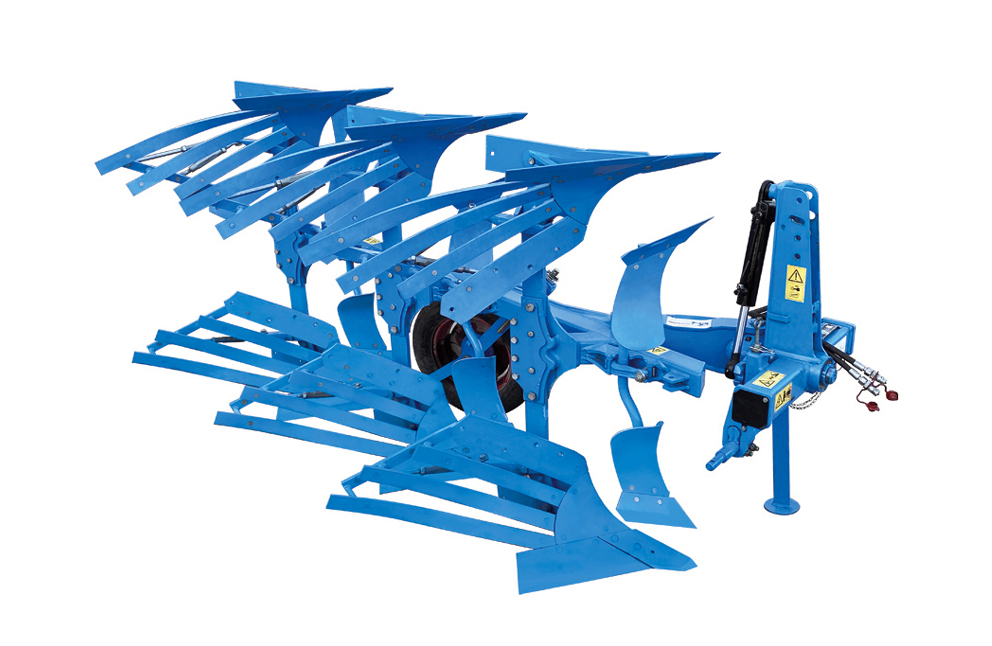
Soil health is the foundation of sustainable agriculture, and the methods farmers choose to prepare and maintain their land directly impact long-term productivity and environmental outcomes. A reversible plough stands as one of the most effective tools for achieving soil conservation goals while maintaining operational efficiency. Unlike traditional fixed-direction ploughs, a reversible plough can work in both directions, allowing farmers to alternate their ploughing patterns and reduce soil compaction in any single zone. This capability makes a reversible plough an invaluable investment for operations committed to sustainable practices, reduced erosion, and improved soil structure across seasons and years.

The sustainability advantages of a reversible plough extend far beyond simple convenience. By distributing mechanical pressure evenly across fields and enabling farmers to reverse their working direction with each pass, a reversible plough minimizes the formation of hardpans—dense soil layers that restrict root penetration and water infiltration. This improved soil structure creates conditions for better nutrient cycling, enhanced water retention, and stronger plant root development. The result is a farming system that reduces dependency on external inputs while protecting the long-term viability of the land itself.
How Reversible Plough Design Enhances Soil Conservation
Dual-Direction Soil Turnover Mechanism
The core engineering principle behind a reversible plough involves its ability to flip or rotate its ploughing bodies between forward and reverse positions. When a reversible plough operates in one direction during the first season, the soil is turned and aerated in a consistent manner. During the next season or growing cycle, the reversible plough can be adjusted to work in the opposite direction, ensuring that compaction and soil structure changes are distributed evenly across the field rather than accumulating in single pathways. This alternating approach prevents the formation of compacted soil zones that typically develop under conventional ploughing systems, where equipment constantly follows the same routes and depths.
Reduced Soil Compaction and Structural Integrity
Conventional ploughing can inadvertently create hardpan layers as repeated passes in the same direction compact soil particles into increasingly dense formations. A reversible plough counteracts this by distributing mechanical stress across multiple soil zones and directions. The result is preserved soil structure, improved pore space distribution, and better drainage characteristics. When soil maintains good structural integrity, water moves through it more efficiently, reducing both waterlogging risks in wet seasons and water stress during dry periods. Farmers using a reversible plough typically observe improved root penetration to greater depths, allowing crops to access nutrients and moisture in deeper soil horizons that remain inaccessible to plants in compacted soils.
Environmental and Agronomic Benefits of Reversible Plough Operations
Erosion Control and Topsoil Protection
Soil erosion represents a major challenge in sustainable agriculture, particularly on sloping terrain or in regions with heavy rainfall. A reversible plough contributes to erosion control by maintaining soil structure and organic matter stability. Well-structured soil with good aggregate formation resists wind and water erosion far more effectively than compacted or degraded soil. Additionally, the alternating ploughing pattern created by a reversible plough can reduce the formation of defined water runoff channels that typically develop when equipment consistently follows the same paths. This protection of topsoil is critical because topsoil contains the highest concentration of organic matter and biological activity, both essential for crop nutrition and long-term soil fertility.
Biological Activity and Carbon Sequestration
Healthy soil structure maintained through reversible plough use supports robust microbial communities, earthworm populations, and other organisms that drive soil biological processes. A reversible plough minimizes soil compaction, allowing these organisms to move freely and establishing the conditions necessary for natural soil aggregation and carbon stabilization. Improved soil biology also enhances nutrient cycling processes, reducing the need for synthetic fertilizers and supporting more sustainable nutrient management. The organic matter stability promoted by a reversible plough further supports carbon sequestration in soil, contributing to climate change mitigation goals while simultaneously improving soil fertility and crop productivity over extended periods.
Practical Implementation and Long-Term Sustainability Outcomes
Field Planning and Rotation Strategies
Effective use of a reversible plough requires strategic planning and record-keeping to ensure consistent directional alternation across seasons. Farmers should establish clear ploughing direction maps and rotate these directions systematically—ploughing northbound one year and southbound the next, for example, or alternating between east-west and north-south patterns across different fields. This systematic approach ensures that a reversible plough delivers its full conservation benefits. Documentation of ploughing directions also helps identify any field zones where additional management attention may be needed, allowing operators to adjust depths, speeds, or timing based on specific soil conditions and weather patterns observed over years of operation.
Integration with Broader Soil Conservation Programs
A reversible plough functions most effectively as part of an integrated soil conservation strategy that may include cover cropping, reduced tillage in certain zones, residue retention, and crop rotation. When combined with these complementary practices, a reversible plough amplifies conservation outcomes by maintaining the structural benefits that other practices develop. For instance, when a reversible plough is used on land previously under cover crops, the improved soil structure and biological activity from the cover crops are preserved rather than degraded by inconsistent ploughing. This synergistic approach creates a regenerative agricultural system where each practice reinforces the others, resulting in progressively improving soil health, reduced input requirements, and enhanced profitability over time.
FAQ
Can a reversible plough completely prevent soil compaction?
While a reversible plough significantly reduces compaction and prevents hardpan formation by alternating working directions, some degree of soil compaction is inherent to mechanical tillage operations. However, by distributing compaction across multiple zones and directions rather than accumulating it in single pathways, a reversible plough maintains overall soil health and structure far better than conventional ploughing systems. The key is consistent alternation of ploughing direction across seasons to maximize the compaction-distribution benefit of a reversible plough.
What soil types benefit most from reversible plough operations?
A reversible plough delivers benefits across all soil types, though the impact is most pronounced in clay and silty soils that are naturally prone to compaction and structure degradation. Heavy soils with limited natural porosity respond particularly well to the structural improvements enabled by a reversible plough's alternating-direction mechanism. Sandy soils also benefit from the organic matter mixing and consistent aeration patterns that a reversible plough provides. For any soil type, consistent use of a reversible plough over multiple seasons compounds the conservation advantages as soil structure continuously improves.
How does a reversible plough compare to conservation tillage methods?
A reversible plough complements conservation tillage by offering a middle path between conventional intensive tillage and minimal-disturbance approaches. While conservation tillage and reduced tillage methods minimize soil disruption, a reversible plough provides controlled, bidirectional disturbance that maintains beneficial structure while preventing compaction accumulation. Many farmers integrate a reversible plough into conservation systems by using it strategically in rotation with reduced-till years, achieving both immediate soil preparation benefits and long-term structural improvements that minimize the need for repeat intensive operations.