 EN
EN

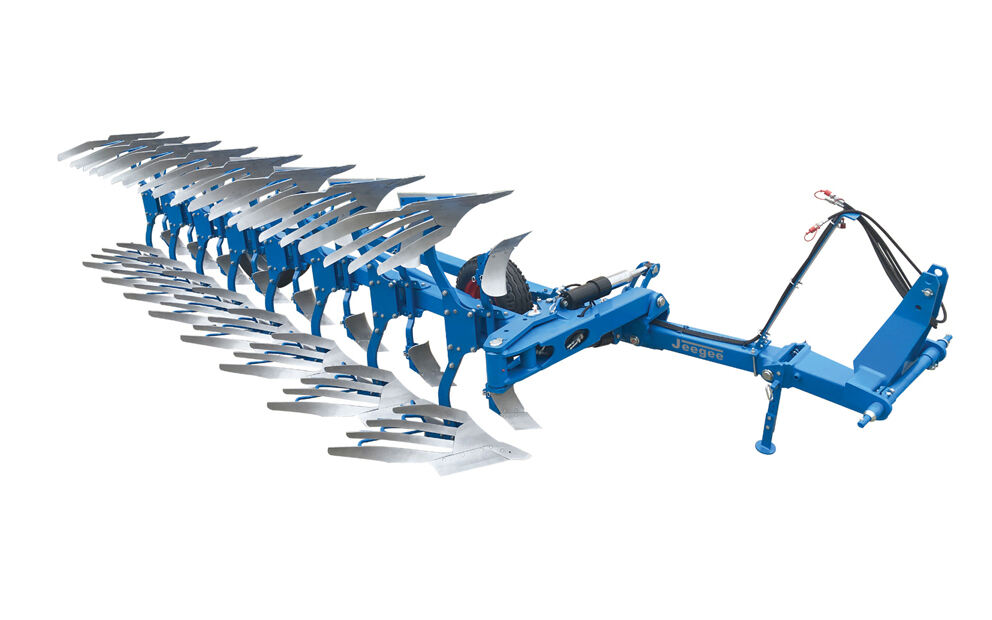
When managing large crop cultivation areas, every operational decision directly impacts output, soil health, and long-term profitability. Among the most foundational of these decisions is the choice of tillage equipment, and the plough remains one of the most debated and consequential tools in large-scale farming. Farmers and agribusiness managers frequently ask whether investing in modern ploughing technology genuinely improves agricultural productivity or whether it simply adds cost and complexity to an already demanding operation. The answer, supported by decades of agronomic practice, is that the plough — when selected and used correctly — can make a measurable and lasting difference in how productive large cultivation areas become.
Understanding what a plough actually does to soil — and why that matters at scale — is essential for any operator managing hundreds or thousands of hectares. This article explores the specific mechanisms through which a plough improves productivity in large cultivation settings, the conditions that determine how much benefit farmers can expect, and the practical decisions that determine whether ploughing delivers results or falls short of expectations. Whether you are evaluating new equipment or reconsidering your tillage strategy, the insights here are designed to help you make a better-informed, more profitable decision.
How a Plough Transforms Soil Conditions at Scale
Soil Inversion and Its Productivity Benefits
The primary action of any plough is soil inversion — turning the topsoil layer downward and bringing subsoil materials upward. In large crop cultivation areas, this process delivers several cascading benefits that directly affect yield potential. By inverting the soil, a plough buries surface crop residues, weed seeds, and disease-carrying organisms deep enough that they decompose without threatening the next crop cycle. This reduces the pressure on chemical treatments, lowering input costs while maintaining a cleaner seedbed.
Soil inversion also improves the physical structure of compacted ground, which is a persistent challenge on large farms with heavy machinery traffic. When a plough breaks through compaction layers, it allows roots to penetrate deeper, improving access to water and nutrients already present in the soil profile. This alone can translate into measurable yield gains — particularly for deep-rooting crops such as maize, sunflower, and sugar beet — without any additional fertilizer application. For large cultivation areas where marginal gains across thousands of hectares compound into significant revenue differences, this benefit is far from trivial.
The loosening effect of a quality plough also improves drainage in waterlogged soils and aeration in dense clay-heavy profiles. Better drainage reduces waterlogging stress on crops during wet seasons, while improved aeration accelerates organic matter decomposition, releasing nutrients at a pace better matched to crop uptake cycles. These are not incremental improvements — in fields where poor soil structure has historically constrained yields, ploughing can be transformative.
Seedbed Preparation and Uniformity
In large-scale farming, consistency matters as much as peak performance. A plough creates a uniformly worked soil layer across wide field areas, giving subsequent secondary tillage operations a more predictable surface to refine. This uniformity translates into more consistent seed placement, better germination rates, and more even crop emergence — all of which contribute directly to the final yield figure. Fields that are ploughed properly before planting tend to show more uniform crop stands, reducing the variation that makes yield management and harvesting more complex.
The relationship between plough quality and seedbed consistency is especially visible on large cultivation areas where field variation is high. Different soil textures, organic matter levels, and moisture conditions across a single large field can produce dramatically different results if tillage is shallow or inconsistent. A well-calibrated plough addresses this variability by working to a consistent depth and achieving even soil fracture across its full working width, minimizing the patchwork germination that undermines productivity in large-scale settings.
The Role of Plough Design in Large-Scale Productivity
Disc Ploughs Versus Other Configurations
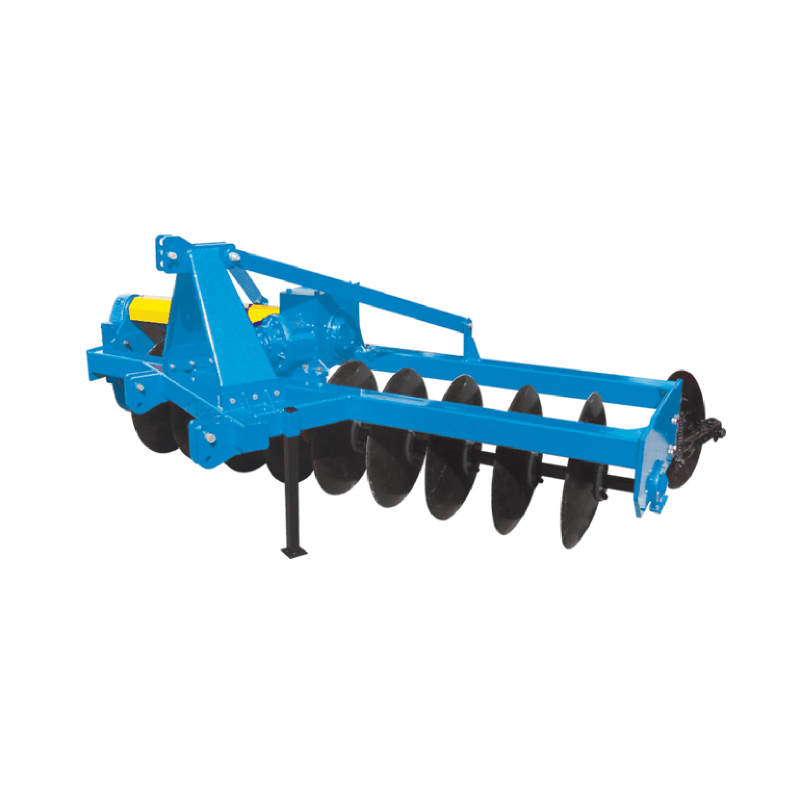
Not all plough types deliver the same productivity benefits in large crop cultivation areas. Disc ploughs are particularly well-suited to large-scale operations because they handle hard, dry, and stony soils effectively — conditions that are common in many tropical, subtropical, and semi-arid agricultural regions. Their rotating disc blades cut through tough residues and resistant soil without the clogging issues that can slow conventional mouldboard designs under certain conditions. For farm operators managing diverse soil profiles across large estates, a disc-type plough offers the operational flexibility needed to maintain consistent performance throughout the season.
The durability and maintenance profile of a disc plough also matters greatly in large-scale operations where downtime during the narrow ploughing window can directly cost yield. Disc designs typically require less frequent adjustments and are more resistant to damage from roots, rocks, and hard pan layers that would stop a more delicate tillage implement. This robustness, combined with the ability to mount multi-bottom configurations on high-horsepower tractors, makes the disc plough a high-productivity choice for large cultivation areas seeking both reliability and throughput. You can explore purpose-built options such as the plough designed for demanding large-scale field conditions.
Working depth and width configurations are critical design parameters for any plough intended for large-area cropping. Wider working widths reduce the number of passes required to cover a field, saving fuel and time without sacrificing tillage quality. Adjustable depth controls ensure that the plough can be set to match the agronomic requirements of each specific crop and field condition, preventing over-tillage of lighter soils while ensuring adequate fracture depth in heavier profiles. Getting these configurations right is one of the key decisions that separates productive ploughing programs from costly ones.
Matching Plough Specification to Field Scale
Selecting a plough without carefully matching its specification to the scale and conditions of the target cultivation area is one of the most common productivity mistakes in large-scale farming. An undersized plough that requires more passes than necessary wastes fuel and compresses the available ploughing window, while an oversized implement can exceed the tractor's hydraulic and draft capacity, leading to poor tillage quality and premature equipment wear. The productivity gains a plough delivers are maximized when its working width, depth range, and frame strength are precisely matched to the operational reality of the farm.
For large cultivation areas spanning multiple soil types, modular plough configurations that allow the operator to add or remove working bodies offer a practical solution. This adaptability enables the same base implement to perform efficiently across light sandy soils requiring fewer bodies and heavier clay soils requiring more aggressive configurations. In the context of large-scale agricultural productivity, this kind of operational flexibility reduces the total number of specialized implements needed while improving per-hectare efficiency throughout the seasonal calendar.
Agronomic Conditions That Determine Ploughing Productivity Impact
Soil Type, Moisture, and Timing
The productivity improvement delivered by a plough is not unconditional — it depends heavily on the agronomic conditions under which it is used. Soil moisture at the time of ploughing is arguably the most critical variable. Ploughing soil that is too wet results in smeared, structureless furrow slices that compact further as they dry, actively harming future root development. Ploughing soil that is excessively dry can shatter it into clods too large for effective seedbed preparation, requiring additional tillage passes that cost time and fuel. The productivity window for effective ploughing exists between these extremes, and on large cultivation areas, identifying and acting within that window demands both good monitoring systems and flexible operational logistics.
Soil type also determines how much benefit a plough delivers per pass. Heavy clay soils with strong natural structure and poor drainage respond most dramatically to ploughing, showing large improvements in drainage, aeration, and root penetration depth. Sandy soils with naturally loose structure may benefit less from deep inversion and more from minimal disturbance strategies, meaning operators on mixed-soil farms need to match tillage intensity to specific field areas rather than applying a uniform approach across the entire operation. A quality plough used strategically — not uniformly — is the key to unlocking its full productivity potential.
Crop Rotation and Residue Management Context
The productivity benefit of a plough is often most visible when it is integrated into a well-designed crop rotation system. Following a high-residue crop such as maize or sorghum, ploughing effectively buries the bulk of that residue, accelerating decomposition and reducing the carry-over of surface pathogens and pest populations into the next season. This disease and pest management benefit is particularly valuable in large continuous cropping systems where rotation options are limited and residue loads are consistently high.
In contrast, using a plough after every crop in every year without regard for soil biology and organic matter trends can gradually deplete the soil's structural integrity. Experienced large-scale operators typically alternate ploughing years with reduced tillage or cover cropping phases, giving soil biology the recovery period needed to maintain long-term productivity. The most productive large cultivation areas are those where ploughing is used as one tool within a broader, evidence-informed soil management strategy — not as a default that substitutes for agronomic thinking.
Operational Efficiency and Cost Considerations at Farm Scale
Fuel Efficiency and Timeliness in Large Operations
Productivity in large crop cultivation is not measured only in yield per hectare — it is also measured in output per unit of input cost. A plough that delivers excellent soil fracture but requires excessive fuel, operator time, or maintenance cost may not improve net productivity even if it improves gross yield. This is why operational efficiency is a central consideration when evaluating ploughing programs on large farms. Modern disc plough designs have advanced significantly in terms of draft efficiency, reducing the horsepower required per unit of working width and per unit of working depth compared to older configurations.
Timeliness also affects how much of a plough's theoretical yield benefit is actually realized. In large cultivation areas, the ploughing window between harvest of one crop and optimal planting time for the next is often narrow. A plough that can be operated at faster forward speeds without sacrificing tillage quality gives operators the ability to complete ploughing across the full farm area before soil conditions deteriorate or planting windows close. This timeliness factor can be the difference between achieving full yield potential and accepting a reduced stand due to late planting.
Long-Term Soil Health and Sustained Productivity
The long-term productivity case for regular, well-managed plough use rests on its contribution to sustained soil health in intensively managed systems. By periodically breaking up compaction layers that accumulate under heavy equipment traffic, a plough resets the soil's physical structure, preventing the progressive yield decline that compaction-driven hardpan development causes over time. In large cultivation areas with limited crop rotation options, this reset function is particularly important for maintaining soil productivity year after year.
Organic matter incorporation is another long-term contribution of regular ploughing in large-scale systems. By burying surface residues and incorporating them into the active soil layer, a plough feeds soil biology over time, gradually building the organic matter reserves that underpin sustained productivity. This is not an immediate season-to-season benefit — it accumulates over multiple seasons — but for operators managing large cultivation areas over decades, it represents a significant structural investment in the long-term productive capacity of the land.
FAQ
Does a plough actually increase crop yield in large fields?
Yes, a plough can increase crop yield in large fields by improving soil structure, reducing compaction, burying weed seeds and disease residues, and creating a more uniform seedbed for planting. The magnitude of yield improvement depends on soil type, current compaction levels, and how well the ploughing program is timed and executed. Fields with significant compaction or heavy residue challenges typically show the largest yield responses to ploughing.
How often should large cultivation areas be ploughed?
The optimal frequency of plough use in large cultivation areas varies by soil type, crop rotation, and observed compaction trends. Many experienced operators plough every two to four years rather than annually, alternating with reduced tillage seasons to preserve soil biology and organic matter. Annual ploughing may be justified in consistently high-residue rotations or on soils prone to severe compaction, but the decision should always be based on field-specific agronomic observation rather than a fixed calendar schedule.
What type of plough works best for large-scale tropical and semi-arid farming?
For large-scale tropical and semi-arid farming, disc-type ploughs are generally the preferred choice because they perform reliably in hard, dry, and stony soils that would challenge conventional mouldboard designs. A well-specified disc plough handles tough crop residues, resists damage from rocks and roots, and can be configured in multi-bottom arrangements for high-horsepower tractors. These characteristics make it particularly productive across the diverse, demanding conditions typical of large tropical and subtropical cultivation areas.
Can ploughing cause harm to soil if overused?
Yes, excessive or poorly timed use of a plough can harm soil productivity over time by disrupting soil biology, accelerating organic matter decomposition faster than it is replaced, and creating tillage pan layers just below the ploughing depth. The risk of harm is greatest when ploughing is performed on wet soils or without regard for long-term organic matter and soil biology trends. Used strategically within a balanced tillage and rotation program, however, a plough is a net positive contributor to sustainable soil productivity in large cultivation areas.