 EN
EN

Modern irrigation farming operates under increasing pressure — tighter water budgets, higher labor costs, and growing demand for consistent crop yields. The question of whether agricultural machinery can genuinely improve efficiency in this context is not merely theoretical. Farmers, agribusiness managers, and land development professionals are actively evaluating how mechanized solutions translate into measurable gains on irrigated fields, and the evidence emerging from the field is compelling.
The relationship between agricultural machinery and irrigation efficiency is deeply layered. It spans soil preparation quality, water distribution precision, crop spacing consistency, and the overall reduction of manual intervention at critical growth stages. Understanding how each mechanical function contributes to a more productive and resource-conscious irrigation system is essential for any operation looking to scale responsibly and sustainably.
The Role of Agricultural Machinery in Irrigation System Performance
Soil Preparation as the Foundation of Water Management
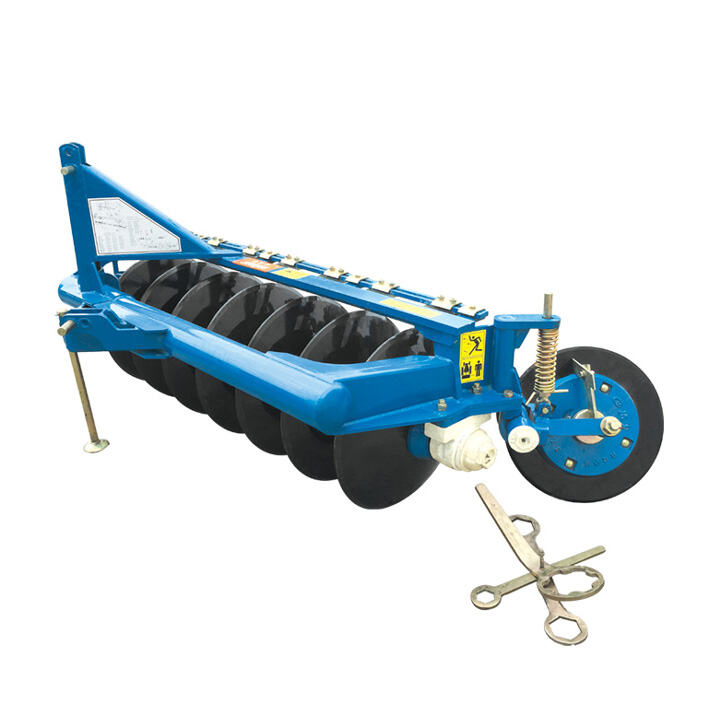
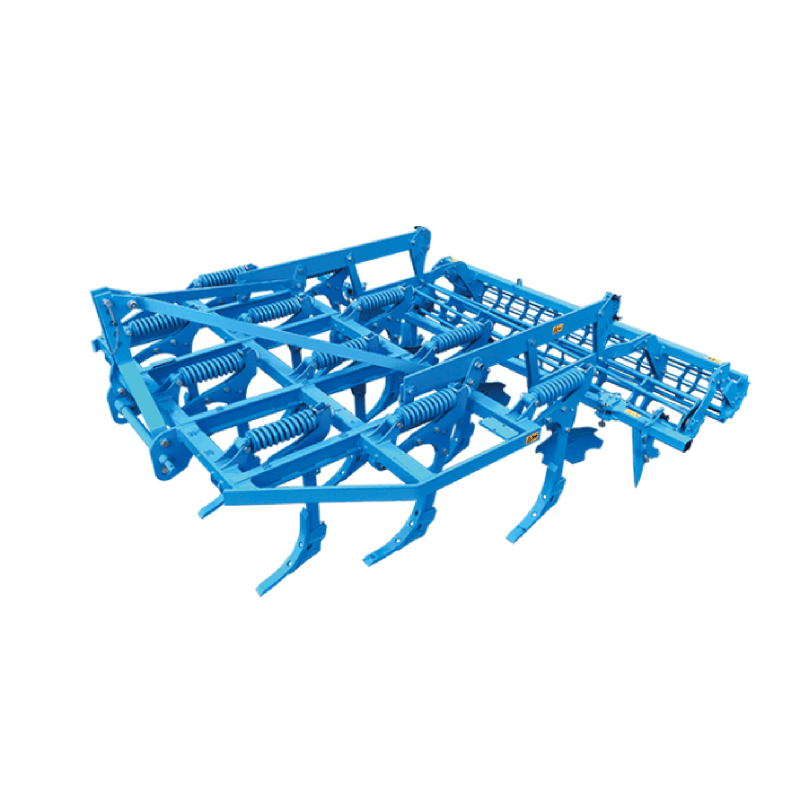
Before water ever reaches a crop root, the condition of the soil determines how effectively it can be absorbed, retained, and distributed. Agricultural machinery designed for ground preparation — including tillers, bed formers, and subsoilers — directly influences the soil's hydraulic properties. When soil is properly broken up, aerated, and leveled, water infiltration rates improve significantly, reducing surface runoff and ensuring moisture reaches the root zone evenly.
In irrigated systems particularly, uneven soil beds create pooling zones and dry patches within the same field. Agricultural machinery that delivers consistent tillage depth and uniform surface leveling helps eliminate this problem before irrigation begins. This is not a secondary concern — it is the mechanical prerequisite for any irrigation strategy to work as intended. Poor soil preparation negates even the most sophisticated drip or sprinkler systems.
Ground preparation machines used in modern operations are engineered to handle a variety of soil types, from compacted clay to loose sandy loams. The mechanical action of well-calibrated agricultural machinery creates a seedbed with ideal bulk density for water movement, which is particularly critical in high-frequency irrigation schedules where soil saturation levels must remain precisely controlled.
Land Leveling and Irrigation Water Distribution
Land leveling is one of the most direct ways agricultural machinery contributes to irrigation efficiency. Even minor elevation differences across a field — sometimes as small as a few centimeters — can result in dramatically uneven water distribution in surface or furrow irrigation methods. Laser-guided or GPS-assisted leveling equipment, as a category of agricultural machinery, helps create the uniform gradient needed for water to flow predictably and evenly.
When agricultural machinery achieves proper field leveling, farmers using flood or furrow irrigation can reduce total water application volumes by a significant margin while maintaining or improving crop coverage. This reduction is not just cost-saving — it also reduces energy costs for pumping, lowers the risk of soil erosion, and extends the operational lifespan of irrigation infrastructure by reducing pressure variation across the system.
For operations transitioning from traditional to semi-mechanized irrigation methods, investing in land preparation agricultural machinery is often the highest-return first step. The improvement in field geometry creates a multiplier effect across all subsequent inputs, from seed placement to fertilizer efficiency and harvest logistics.
Mechanized Crop Management and Its Impact on Water Use Efficiency
Precision Seeding and Row Alignment in Irrigated Fields
Irrigation efficiency is not just about delivering water — it is also about ensuring that water reaches where crops actually are. Agricultural machinery used for precision seeding ensures that plants are placed at exact spacing and depth, aligning planting rows with irrigation lines or furrow placements. This spatial alignment between crop placement and water delivery infrastructure significantly reduces water wastage from misaligned or irregular plant rows.
In drip irrigation systems especially, the accuracy of seed placement relative to emitter locations determines whether each plant receives optimal moisture or whether water is lost to bare soil between rows. Agricultural machinery with precision metering capabilities eliminates the guesswork that comes with manual planting, creating a predictable, repeatable relationship between plant position and water source geometry.
Beyond water efficiency, precision seeding through agricultural machinery also allows for uniform canopy development, which reduces soil moisture evaporation from direct sun exposure on bare soil between unevenly spaced plants. This cumulative effect across a large irrigated field represents a meaningful reduction in total evapotranspiration demand, ultimately lowering how much water must be applied per crop cycle.
Cultivation and Weed Suppression to Protect Irrigation Investments
Weeds compete directly with crops for the water delivered by irrigation systems. In fields where mechanical cultivation is absent, weed populations can consume a disproportionate share of applied irrigation water, reducing crop water use efficiency and ultimately suppressing yield. Agricultural machinery configured for inter-row cultivation physically removes weeds at critical growth stages without requiring chemical applications that may affect soil biology.
Regular mechanical cultivation using agricultural machinery also breaks up surface crusting that forms in irrigated fields after repeated wetting and drying cycles. Surface crusting dramatically reduces water infiltration rates, forcing more water to run off before it can enter the soil. Cultivation disrupts this crust, restoring infiltration capacity and keeping the irrigation system performing at designed efficiency levels.
The economic logic of using agricultural machinery for cultivation rather than herbicides or manual labor is particularly strong in large-scale irrigated operations. The machinery amortizes its cost across many seasons, delivers consistent performance regardless of labor availability, and avoids the chemical input costs and regulatory compliance burdens associated with chemical weed management strategies.
How Agricultural Machinery Reduces Labor Dependency in Irrigation Operations
Mechanizing Time-Sensitive Tasks in the Irrigation Cycle
Irrigation farming involves several time-sensitive tasks — soil preparation before planting, bed formation before seeding, cultivations at specific growth stages, and harvest — all of which must occur within narrow windows to avoid disrupting the irrigation schedule. Agricultural machinery compresses the time required for these tasks, ensuring that operations stay synchronized with irrigation timetables rather than creating delays that force costly adjustments to water delivery schedules.
In regions where seasonal labor availability is unreliable, reliance on manual methods for field preparation or cultivation creates operational risk. Agricultural machinery provides a consistent, controllable workforce alternative that can be deployed regardless of external labor market conditions. This reliability is particularly valuable in irrigated perennial crop operations where field management tasks recur on fixed annual or seasonal cycles.
The integration of agricultural machinery into irrigation operations also frees up available labor for higher-value tasks — crop monitoring, system maintenance, quality grading — that benefit more directly from human judgment. This reallocation of human effort alongside mechanical efficiency creates a compounding productivity improvement that goes well beyond simple task substitution.
Reducing Soil Compaction Risks from Heavy Foot Traffic
In intensively irrigated fields, the soil is frequently moist, making it highly susceptible to compaction from foot traffic during manual operations. Soil compaction reduces pore space, impairs root development, and critically reduces the infiltration capacity that makes irrigation effective in the first place. Agricultural machinery, when properly configured with appropriate tire pressure or track systems, can perform field operations with less soil disturbance than equivalent manual labor at scale.
Modern agricultural machinery is increasingly designed with soil health as a design parameter — not just operational output. Narrow track widths, reduced ground pressure configurations, and controlled traffic farming approaches all reflect an understanding that the machinery's interaction with soil in irrigated conditions must be managed carefully. This evolution in agricultural machinery design directly benefits irrigation efficiency by preserving the soil structure that makes water management effective.
Long-Term Efficiency Gains from Investing in Agricultural Machinery
Consistency, Repeatability, and Reduced Input Waste
One of the most underappreciated benefits of agricultural machinery in irrigated farming is the consistency it delivers across large areas and multiple seasons. Manual operations introduce variability — different workers, different techniques, different output qualities — that creates unpredictable results in soil preparation, seeding, and cultivation quality. Agricultural machinery, once calibrated, delivers the same outcome at row one and row one thousand, creating the uniformity that efficient irrigation management requires.
This consistency directly translates into reduced input waste. Uniform seed placement means fewer replanting inputs. Consistent tillage depth means fertilizer placement is predictable. Even bed formation means irrigation water moves at design flow rates rather than pooling or bypassing irregularly. Every layer of consistency added by agricultural machinery reduces the waste that accumulates across a full crop season in an irrigated system.
For agribusiness operators managing multiple irrigated fields, the scalability of agricultural machinery is a critical efficiency multiplier. A single well-specified machine can prepare, seed, and cultivate areas that would require dozens of manual workers — maintaining quality standards that simply cannot be sustained at scale through non-mechanized approaches. The return on investment in agricultural machinery compounds over seasons as operational learning improves utilization rates.
Supporting Data-Driven Irrigation Management
Modern agricultural machinery increasingly integrates with farm management systems that collect operational data — GPS track logs, working depth records, speed profiles, and area coverage reports. This data provides irrigation managers with ground-truth information about field conditions that can be used to calibrate irrigation schedules more precisely. Knowing exactly where tillage depth varied, or where soil conditions differed, allows irrigation managers to adjust zone timing or flow rates accordingly.
Agricultural machinery that generates operational data essentially becomes an input into precision irrigation management, not just a field preparation tool. This integration between mechanized field operations and digital irrigation management represents the current frontier of efficiency improvement in modern irrigated farming. It closes the feedback loop between how the field was prepared and how water should be applied, creating a more intelligent, responsive irrigation system.
As sensor technology becomes more accessible, the connection between agricultural machinery and irrigation management systems will deepen further. Soil moisture sensors, drone-based canopy mapping, and machine telematics are converging into integrated platforms that allow irrigation decisions to be informed by real-time data generated partly through the operation of agricultural machinery across the field.
FAQ
How does ground preparation agricultural machinery directly improve water use efficiency?
Ground preparation agricultural machinery improves water use efficiency by creating a uniform, well-aerated seedbed that allows irrigation water to infiltrate evenly and reach the root zone without surface runoff or pooling. Consistent tillage depth and proper soil structure directly determine how effectively every liter of irrigation water is utilized rather than lost to evaporation or drainage.
Is agricultural machinery suitable for small and medium-scale irrigated farms?
Yes, agricultural machinery is available across a wide range of scales and configurations. Compact multi-purpose machines designed for small and medium irrigated farms deliver the same core efficiency benefits as large-scale equipment — consistent soil preparation, reduced labor dependency, and better crop-to-irrigation alignment — while remaining practical for operators with limited acreage and smaller capital budgets.
What types of agricultural machinery have the greatest impact on irrigation efficiency?
Ground preparation machines, land leveling equipment, precision seeders, and inter-row cultivators have the most direct impact on irrigation efficiency. Each type of agricultural machinery addresses a specific efficiency lever — soil structure, field geometry, crop placement accuracy, or weed competition — and together they create a mechanized system where irrigation water is used with maximum precision and minimum waste.
How does agricultural machinery help manage soil compaction in irrigated fields?
Agricultural machinery designed for irrigated conditions uses configurations that minimize ground pressure on moist soils, including wider tires, reduced inflation pressures, and controlled traffic farming layouts. These approaches preserve the soil porosity and infiltration capacity that make irrigation systems work efficiently, preventing the compaction cycles that progressively degrade water use performance in intensively irrigated operations.
Table of Contents
- The Role of Agricultural Machinery in Irrigation System Performance
- Mechanized Crop Management and Its Impact on Water Use Efficiency
- How Agricultural Machinery Reduces Labor Dependency in Irrigation Operations
- Long-Term Efficiency Gains from Investing in Agricultural Machinery
-
FAQ
- How does ground preparation agricultural machinery directly improve water use efficiency?
- Is agricultural machinery suitable for small and medium-scale irrigated farms?
- What types of agricultural machinery have the greatest impact on irrigation efficiency?
- How does agricultural machinery help manage soil compaction in irrigated fields?