 EN
EN

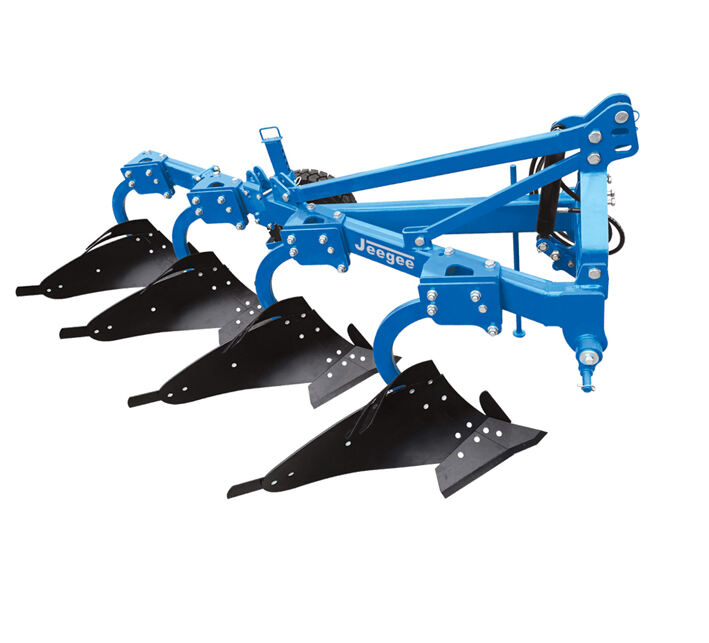
Modern rice and grain farming operations have been fundamentally transformed by the introduction and refinement of agricultural machinery. From the earliest stages of field preparation to the final steps of harvest and post-processing, purpose-built machines now handle tasks that once required enormous amounts of manual labor. Understanding how agricultural machinery is deployed across these operations helps farm managers, agribusiness investors, and procurement teams make better decisions about equipment adoption and workflow design.
Rice and grain farming present unique mechanical challenges compared to other crop systems. Paddy fields require precise water management, carefully timed planting, and specialized harvesting approaches. Agricultural machinery designed for these environments must account for soft, waterlogged soils, dense plant spacing, and the delicate nature of grain kernels during harvest. This article explores the full operational lifecycle of rice and grain farming and the role that agricultural machinery plays at each critical stage.

Land Preparation and Soil Management
Tillage and Field Leveling Equipment
The foundation of any successful rice or grain crop begins with proper land preparation. Agricultural machinery used at this stage includes power tillers, rotary cultivators, and disc harrows, all of which break up compacted soil, incorporate organic matter, and create the fine seedbed texture necessary for uniform germination. In paddy rice farming, puddling — the process of churning wet soil into a saturated, smooth layer — is performed using specialized wet tillage attachments that only dedicated agricultural machinery can efficiently achieve across large field areas.
Field leveling is equally critical, particularly in flooded rice systems where standing water must be distributed evenly. Laser-guided land levelers and tractor-mounted grading blades allow operators to achieve near-perfect surface uniformity, which directly improves water use efficiency and reduces the risk of uneven crop establishment. Without appropriate agricultural machinery for leveling, farmers frequently lose yield to dry spots or areas of excessive submergence, both of which suppress grain fill and reduce overall output.
Subsoil compaction is another issue that affects grain root penetration and drainage. Subsoilers and deep-tillage tools, which are a standard category of agricultural machinery in grain farming, fracture compacted layers below the plow depth to restore natural drainage pathways. This intervention is particularly important in fields that have been farmed intensively for multiple seasons without mechanical subsoil disruption.
Irrigation and Water Control Systems
Water management in rice farming is inseparable from the use of agricultural machinery. Pump sets, irrigation pipes, and automated sluice gate systems are all classified as part of the broader agricultural equipment ecosystem. Motorized water pumps allow farmers to flood paddy fields rapidly during transplanting and drain them efficiently before harvest, two operations that directly affect crop survival and machine access respectively.
In larger grain farming operations, center-pivot and drip irrigation systems controlled by electronic timers or soil moisture sensors represent the more technologically advanced end of the agricultural machinery spectrum. These systems reduce water consumption significantly while maintaining crop water stress within optimal thresholds. The precision achievable with modern irrigation agricultural machinery contributes directly to higher, more consistent grain yields per unit area.
Seeding and Transplanting Operations
Direct Seeding Equipment for Grain Crops
Direct seeding is the dominant establishment method for wheat, barley, maize, and many other grain crops. Agricultural machinery designed for direct seeding includes grain drills, air seeders, and precision planters, each of which meters seeds at a controlled rate and deposits them at a uniform depth across the field. Accurate seed placement is one of the most value-generating functions of modern agricultural machinery because it determines plant population density, interplant competition, and ultimately yield potential.
Zero-till and minimum-till seeders represent a growing segment of agricultural machinery for grain farming. These machines cut narrow furrows through crop residue and firm soil without disturbing the surface extensively, preserving soil structure, moisture, and beneficial microbial communities. Adoption of zero-till equipment has expanded significantly in regions where soil health degradation and water conservation have become primary operational concerns.
Rice Transplanting Machines and Their Workflow
Transplanting young rice seedlings into flooded paddies is one of the most labor-intensive operations in traditional rice farming. Agricultural machinery in the form of rice transplanting machines has dramatically reduced the labor required for this task while simultaneously improving row spacing accuracy and planting depth consistency. A walking-type rice planting machine, for example, allows a single operator to transplant multiple rows simultaneously at a pace that far exceeds what manual teams can achieve in the same timeframe.
The agricultural machinery designed for paddy transplanting must be capable of operating reliably in soft, waterlogged soil conditions while maintaining consistent seedling placement at programmed row and hill spacings. High-speed walking-type transplanting machines with six-row capacity are particularly valued in smallholder and medium-scale paddy operations because they offer the planting accuracy of ride-on machines without the high capital cost. Proper mat seedling preparation is essential for these machines to function at peak efficiency, which means the entire nursery management workflow must be calibrated to the machine's seedling mat specifications.
The benefits of using transplanting agricultural machinery extend beyond labor savings. Uniform row spacing allows mechanical weeding equipment to operate without damaging crops, and consistent planting depth promotes synchronized tillering and heading, which simplifies harvest timing decisions later in the season. These downstream benefits illustrate why agricultural machinery investment decisions should be viewed as system-level rather than single-task decisions.
Crop Care, Fertilization, and Pest Management
Mechanical Weeding and Inter-Row Cultivation
Weed competition is a primary yield-limiting factor in both rice and grain farming. While herbicide applications are common, mechanical weeding using agricultural machinery such as rotary weeders, inter-row cultivators, and robotic weeding platforms provides complementary or alternative weed control with reduced chemical inputs. In flooded rice paddies, rotary weeders are pushed or driven between rows to uproot and bury weeds while also incorporating surface-applied fertilizers into the root zone.
The effectiveness of mechanical weeding agricultural machinery depends heavily on row spacing precision established during transplanting or direct seeding. This is one of the strongest arguments for investing in accurate planting agricultural machinery early in the crop cycle — it enables the efficient deployment of cultivation equipment later. In grain farming systems, GPS-guided inter-row cultivators can operate at high speeds with centimeter-level accuracy, making mechanical weed control economically viable even at large scale.
Spraying and Fertilizer Application Machinery
Boom sprayers, aerial drone applicators, and broadcast spreaders all fall within the category of agricultural machinery used for crop nutrition and protection. Variable-rate application technology, which adjusts fertilizer or chemical dosing in real time based on field zone maps, represents the current standard for precision farming operations. This capability reduces input waste, minimizes environmental impact, and targets agrochemical resources where they deliver the greatest return.
In rice farming, granular fertilizer applicators mounted on the transplanting machine or deployed as stand-alone units allow simultaneous transplanting and base fertilization in a single pass. This type of multi-function agricultural machinery approach reduces the number of field entries required, which is particularly important in paddy conditions where excessive tractor passes can damage soil structure and disrupt the flooded layer that controls weed germination.
Harvesting and Post-Harvest Processing
Combine Harvesters in Grain Operations
The combine harvester is perhaps the most iconic piece of agricultural machinery in modern grain farming. A full-featured combine performs three distinct operations simultaneously: cutting the standing crop, threshing it to separate grain from straw, and cleaning the grain before depositing it into an onboard tank. The efficiency gain delivered by combine harvesting over traditional manual or semi-mechanical methods is substantial, allowing a single machine to harvest dozens of hectares per day under optimal conditions.
For rice farming, both conventional and axial-flow combine configurations are used, with axial-flow designs generally preferred in high-moisture paddy conditions because they generate less mechanical grain damage during the threshing process. Track-type combine harvesters equipped with wide rubber tracks are specifically designed for soft paddy soil, preventing sinkage and allowing operation in fields that wheeled machines cannot access. This specialization reflects how agricultural machinery development has responded to the unique physical demands of rice farming environments.
Drying, Milling, and Storage Equipment
Freshly harvested rice and grain typically carry moisture levels well above safe storage thresholds. Mechanical grain dryers — a critical category of post-harvest agricultural machinery — reduce grain moisture content to levels that prevent mold growth, mycotoxin development, and storage insect activity. Batch and continuous-flow dryer designs are both widely used depending on operation scale, with temperature control being a critical parameter since excessive heat can damage grain quality and reduce milling recovery rates for rice.
Rice milling equipment, which includes huskers, whiteners, polishers, and graders, represents a downstream segment of agricultural machinery that directly determines the commercial value of the harvested crop. The condition of paddy entering the mill — influenced heavily by the gentleness of the harvesting and handling agricultural machinery used earlier — affects head rice recovery percentage, which is the primary quality metric in milled rice markets. Grain storage systems, including steel silos, aeration fans, and temperature monitoring equipment, complete the post-harvest agricultural machinery infrastructure required to maintain grain quality from field to market.
Mechanization Strategy and Operational Integration
Matching Equipment to Farm Scale and Soil Type
Choosing the right agricultural machinery configuration requires careful alignment between equipment capacity and the physical and operational context of the farm. Smallholder rice farms with fragmented fields and limited access tracks require compact, maneuverable machines such as walking-type transplanting and harvesting equipment. Large-scale grain farms on flat, accessible terrain can deploy full-sized machinery fleets that achieve much lower per-hectare operating costs through economies of scale.
Soil conditions also constrain agricultural machinery selection decisions. Heavy clay soils common in many paddy regions require equipment with high flotation — meaning low ground pressure relative to machine weight — to avoid sinkage and compaction. Sandy loam soils more common in upland grain farming environments allow lighter equipment to operate without the same flotation constraints, broadening the range of suitable agricultural machinery options available to operators in those zones.
Maintenance, Operator Training, and Uptime Management
Agricultural machinery performance over time depends heavily on maintenance discipline and operator competency. Planting machines that are not properly cleaned between uses accumulate soil and plant material in their picking fingers and mat guides, leading to missed hills and uneven spacing that compromise the precision benefits of mechanized transplanting. Combine harvesters require regular inspection of cutting systems, threshing concaves, and cleaning sieves to maintain grain recovery efficiency and minimize field losses.
Investing in operator training is one of the highest-return activities associated with agricultural machinery adoption. Skilled operators not only reduce mechanical failures through correct usage practices but also optimize machine settings — such as transplanting depth, seeding rate, or combine rotor speed — for the specific conditions of each field and each season. When agricultural machinery is well maintained and competently operated, its contribution to farm productivity and profitability becomes fully measurable and consistently positive.
FAQ
What types of agricultural machinery are most important for rice farming?
The most critical agricultural machinery for rice farming includes power tillers for land preparation, transplanting machines for seedling establishment, rotary weeders for in-crop weed management, and combine harvesters or reapers for harvest. Post-harvest equipment such as grain dryers and rice millers also play an essential role in maintaining grain quality after the field phase is complete.
How does agricultural machinery improve yields in grain farming?
Agricultural machinery improves yields by enabling precise seed placement, timely planting within optimal agronomic windows, uniform fertilizer and chemical application, and low-loss harvesting. Each of these functions reduces sources of yield gap that are difficult or impossible to address through manual labor alone. The compounding effect of multiple mechanized operations performed accurately and on time typically results in significantly higher and more consistent yields per hectare.
Is walking-type transplanting machinery suitable for all paddy farm sizes?
Walking-type transplanting agricultural machinery is particularly well-suited to smallholder and medium-scale paddy farms where field sizes are moderate, access conditions are variable, and investment budgets are limited. These machines offer a practical entry point into mechanized transplanting without the capital requirements of ride-on or self-propelled units. For very large commercial operations, ride-on transplanting agricultural machinery with higher row capacity per pass may be more cost-efficient on a per-hectare basis.
What maintenance practices are most important for grain farming equipment?
Routine lubrication of moving parts, timely replacement of wear components such as planting fingers, cutter bars, and threshing elements, and thorough cleaning after each use are the most impactful maintenance practices for agricultural machinery in grain farming. Seasonal pre-operation inspections and prompt repair of minor faults prevent costly breakdowns during critical planting or harvesting windows when delays directly translate into yield loss.