 EN
EN

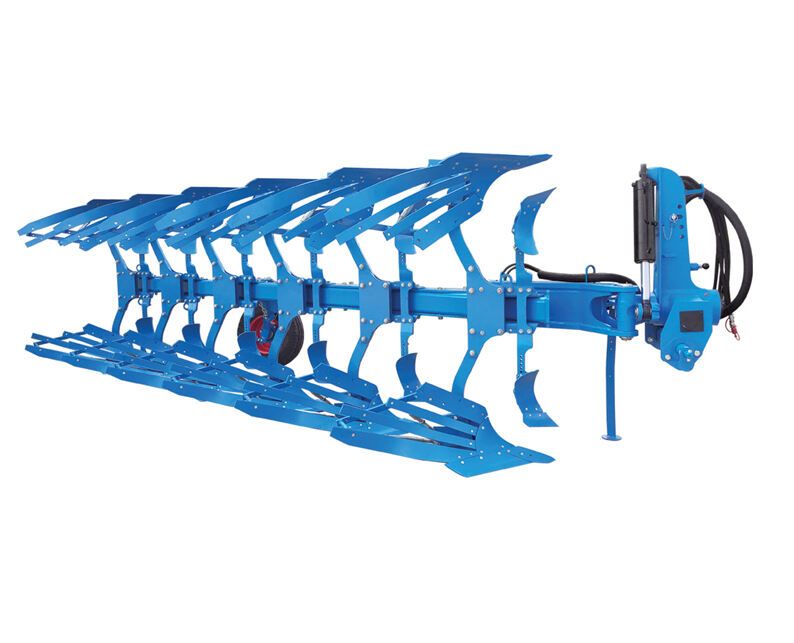
Modern agriculture depends heavily on reliable, well-engineered implements, and the plough remains one of the most foundational tools in land preparation. From breaking compacted topsoil to turning organic matter deep into the earth, a plough directly influences soil structure, aeration, moisture retention, and ultimately crop yield. For farmers who rely on tractors to manage large tracts of land, understanding how a plough functions within that system is essential for making smart equipment decisions and maximizing productivity every growing season.
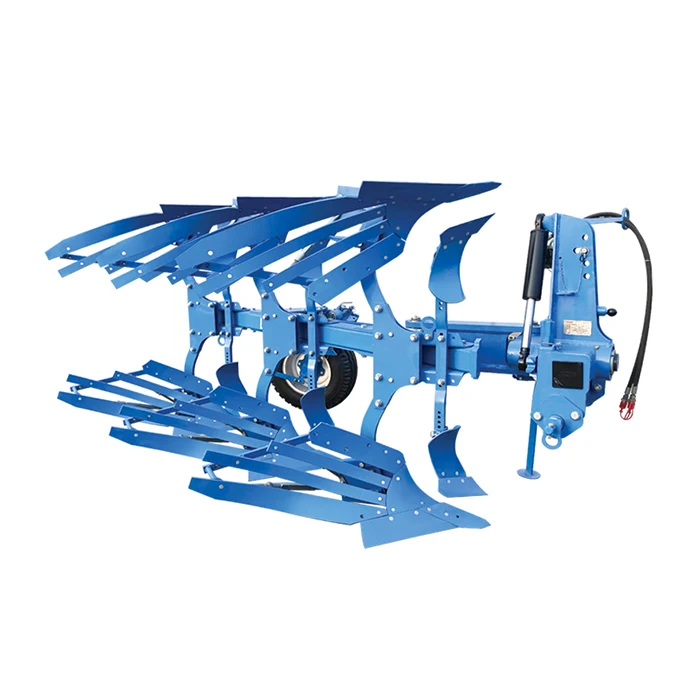
The integration of a plough with a modern tractor is not simply about mechanical attachment — it represents a carefully engineered workflow designed to reduce labor input, improve land preparation speed, and ensure consistent results across diverse soil conditions. As tractor technology has advanced, so too has the design and capability of the plough, making it a versatile and indispensable implement for both small-scale and large-scale farming operations worldwide. This article explores exactly how a plough supports efficient tractor farming and the principles that make it such a critical component of successful land cultivation.
The Mechanical Role of a Plough in Tractor-Driven Land Preparation
How a Plough Breaks and Inverts Soil
The primary function of a plough is to cut through the soil profile, invert it, and expose the lower layers to air and sunlight. This process, known as primary tillage, disrupts compaction caused by foot traffic, rainfall, and previous harvesting operations. When a tractor pulls a plough across a field, the implement's moldboards or discs slice into the earth at a set depth, lifting and turning soil slabs in a continuous motion that fundamentally restructures the seedbed.
This inversion process does more than loosen soil — it buries crop residue, weeds, and surface debris beneath the cultivated layer, effectively suppressing weed growth and incorporating organic material that will decompose and enrich the soil over time. A well-calibrated plough ensures that this inversion is consistent in depth and coverage, creating a uniform layer that supports even germination and root development for subsequent crops.
For farmers managing heavy clay soils or fields with significant residue loads, the plough provides mechanical force that lighter tillage implements simply cannot replicate. The combination of tractor horsepower and plough geometry allows for deep, thorough soil engagement that sets the foundation for a productive growing cycle.
Hydraulic Control and Depth Precision
Modern tractor-mounted ploughs, particularly full suspension hydraulic models, offer precise depth control through the tractor's hydraulic linkage system. This hydraulic integration allows operators to adjust working depth on-the-fly without stopping, responding immediately to changes in soil hardness, field gradient, or crop requirement. The ability to maintain consistent ploughing depth across an entire field is one of the most significant efficiency advantages a hydraulic plough offers over older mechanical systems.
The plough attached via a three-point hitch system allows the tractor's draft control and position control sensors to monitor resistance in real time, automatically adjusting the implement's angle and depth to maintain optimal soil engagement. This intelligent feedback loop reduces fuel consumption by preventing excessive draft under variable soil conditions, contributing directly to operational efficiency and lower running costs per acre.
For large farming operations, where consistent seedbed quality must be achieved across hundreds of hectares, hydraulic depth control transforms what would otherwise be a labor-intensive manual process into a streamlined, operator-friendly workflow. The result is fewer passes needed, less soil compaction from repeated tractor runs, and a more uniform seedbed that supports precision seeding downstream.
How Plough Design Affects Farming Efficiency
Moldboard vs. Disc Plough Configurations
The efficiency of a plough in any given farming situation depends substantially on its design configuration. Moldboard ploughs are particularly well-suited to heavier soils with significant organic residue, as their curved steel plates generate the full inversion necessary to bury surface material completely. Disc ploughs, on the other hand, are better adapted to stony or dry soils where a rolling disc action reduces the risk of implement damage and lowers draft requirements.
Selecting the right plough configuration for soil type and crop rotation system has a direct impact on how efficiently the tractor can perform during land preparation. An improperly matched plough increases fuel consumption, reduces working speed, and may leave unacceptable levels of residue on the soil surface. Farmers who understand their soil profile and seasonal requirements choose plough designs that maximize soil inversion quality while minimizing the mechanical load placed on the tractor.
Multi-furrow plough configurations, which cut several rows simultaneously in a single pass, represent another major efficiency gain for high-output tractor farming. By widening the working swath without proportionally increasing working time, multi-furrow ploughs reduce the total number of passes needed to prepare a field, saving significant time and fuel over the course of a season.
Material Strength and Wear Resistance
The structural integrity of a plough directly affects its performance and operating cost over time. High-strength steel construction on critical components — including shares, moldboards, and frame sections — ensures that the implement maintains its geometry and cutting edge sharpness even after prolonged use in abrasive soils. A plough that retains its working shape performs consistently, while a worn implement introduces variability in furrow depth and residue burial that undermines soil preparation quality.
Modern plough designs incorporate wear-resistant materials in high-contact zones and are engineered to allow field replacement of worn components without removing the entire implement from service. This modularity reduces downtime during peak farming seasons, which is critical when weather windows for ploughing are narrow and delays translate directly into lost yield potential.
Farmers evaluating a plough for tractor use should assess not only the initial build quality but also the availability and cost of wear parts. An implement that offers durable, affordable replacement components provides a much lower total cost of ownership over its working life than one that appears cheaper upfront but requires expensive repairs or full replacement after moderate use.
Ploughing Practices That Maximize Land Cultivation Outcomes
Timing and Soil Moisture Conditions
The effectiveness of any plough operation is highly dependent on soil moisture at the time of tillage. Ploughing in overly wet conditions causes smearing of the soil profile, compacts the subsoil layer under the furrow bottom, and creates cloddy, poorly structured tilth that is difficult to refine into a seedbed. Conversely, ploughing excessively dry soils requires greater tractor power, causes excessive dust, and results in shattered clods that may not consolidate well for seeding.
Experienced farmers time their plough operations to coincide with soil moisture levels in the field capacity range — moist enough to invert cleanly but dry enough to hold furrow shape without structural damage. This timing discipline is one of the most impactful agronomic decisions associated with tillage, affecting soil health, energy efficiency, and seedbed quality in equal measure.
Where irrigation is available, some operations deliberately manage soil moisture prior to ploughing to ensure optimal conditions. This level of precision, combined with an efficient tractor-mounted plough, creates a controlled land preparation process that delivers reliable seedbed quality regardless of seasonal variability.
Plough Settings and Field Calibration
Proper calibration of a plough before entering a field is fundamental to achieving efficient, high-quality results. Key settings include working depth, furrow width, land-side pressure, and skimmer position. Each of these parameters must be adjusted based on soil type, tractor power, and cultivation objectives. A plough that is set too deep for the available tractor power will cause wheel slip and excessive fuel burn, while one set too shallow will fail to achieve adequate residue burial or soil loosening.
Furrow width, or the amount of soil engaged per bottom unit, determines how effectively the tractor's power is converted into productive work. Wider furrow settings increase output per pass but demand more draft force, requiring operators to match their plough configuration to the specific tractor's PTO and hydraulic capacity. This matching process is essential for maintaining stable, efficient field performance across a full workday.
Regular calibration checks during the field operation — particularly when transitioning between soil zones of different texture or moisture content — ensure that the plough continues performing at designed efficiency. Operators who monitor furrow quality and adjust settings responsively reduce the risk of poor cultivation outcomes and ensure that every pass of the tractor contributes maximum agronomic value to the field.
The Contribution of Ploughing to Long-Term Soil Health and Productivity
Soil Aeration and Root Zone Development
Beyond immediate seedbed preparation, the use of a plough contributes to long-term soil health by improving aeration throughout the cultivated profile. Compacted soils restrict root penetration, limit water infiltration, and reduce the biological activity of soil microorganisms that support nutrient cycling. A well-operated plough fractures compacted layers and creates macropore channels that allow roots to extend deeply, accessing water and nutrients from a broader soil volume.
Deep ploughing, where conditions warrant it, can break subsoil pans that have built up over years of shallow cultivation or heavy machinery use. By addressing these restrictive layers, a plough can dramatically improve soil water-holding capacity and drainage simultaneously, creating conditions that support both drought resilience and flood tolerance within the same field.
Crop yields in fields that receive periodic deep ploughing consistently outperform those maintained under shallow or no-till regimes in comparable soil types, particularly where compaction is a recognized issue. This agronomic benefit represents a long-term return on the investment in quality plough equipment and disciplined tillage management practices.
Organic Matter Incorporation and Nutrient Cycling
The inversion function of a plough plays a direct role in organic matter management. By burying crop residues, green manures, and surface-applied compost beneath the cultivated layer, ploughing accelerates the decomposition process and speeds the release of plant-available nutrients. This organic cycling function reduces reliance on synthetic fertilizer inputs over time, contributing to both cost reduction and environmental sustainability in farm operations.
Farmers who integrate cover cropping with ploughing create a powerful soil-building system. Cover crops grown during the off-season are incorporated by the plough before the next cash crop planting, adding biomass, fixing atmospheric nitrogen in legume-based systems, and improving soil aggregate stability. The plough's role in this system is not simply destructive — it is a critical tool in a regenerative soil management strategy.
Understanding the plough as a soil health investment, rather than merely a tillage step, changes how farmers approach equipment specification and operational timing. Those who manage their plough operations with agronomic precision consistently build higher-performing, more resilient soils that support sustainable intensification of crop production over the long term.
FAQ
What is the main advantage of a hydraulic plough over a mechanical one?
A hydraulic plough allows the operator to adjust working depth and angle from the tractor cab in real time, responding to changing soil conditions without stopping. This precision control reduces fuel consumption, minimizes soil damage from incorrect settings, and improves overall field consistency compared to manual mechanical adjustment systems.
How deep should a plough work for typical arable crop production?
For most arable crops, a plough working depth of 20–30 centimeters is considered standard, sufficient to bury residue effectively and loosen the main rooting zone. However, in fields with known subsoil compaction layers or heavy residue loads, deeper passes may be periodically justified to restore full soil function and rooting depth potential.
Can a plough be used on all soil types?
A plough is adaptable to most soil types, but the optimal design varies. Moldboard ploughs work best in heavier, wetter soils with significant organic residue, while disc ploughs are more appropriate for dry, stony, or hard soils. Matching the plough type to soil conditions ensures efficient operation, minimizes wear, and produces the best cultivation quality for each specific farming environment.
How does ploughing affect weed management in a crop rotation system?
Ploughing is one of the most effective mechanical weed control strategies available to farmers. By inverting the soil, a plough buries weed seeds and germinating plants below the depth at which they can emerge, effectively interrupting weed cycles without relying solely on chemical inputs. When used as part of a planned crop rotation, ploughing can significantly reduce the weed seed bank in a field over multiple seasons.